

Sensory processing challenges can affect a child’s confidence, communication, learning, and ability to participate in everyday routines. Families across Ventura County often notice early signs such as difficulty with transitions, overwhelm in noisy environments, or constant seeking of movement or pressure. Sensory integration therapy helps children understand and organize the information their bodies receive, giving them the foundation they need to regulate emotions, stay focused, and successfully explore the world around them. The Centers for Disease Control and Prevention provides helpful information about early developmental concerns, and many parents refer to these resources when deciding whether sensory support is needed.
At Therapy Clubhouse, we provide sensory integration therapy in an environment created with intention and joy. Children can practice new skills inside our 2,000 square foot soft play sensory gym, where movement, exploration, and evidence-based interventions work together to support meaningful progress. Our team blends clinical excellence with playful, child-led sessions so that each child feels safe, supported, and excited to learn.
If you believe your child needs structured sensory support, you can contact Therapy Clubhouse today. Call (805) 624-3301 to speak with our team and schedule an evaluation in Ventura County.
Sensory integration therapy helps children understand and organize the information they receive from touch, sound, movement, and other sensory systems. Many Ventura County families explore this support when they notice their child becoming overwhelmed by routine experiences, having difficulty with transitions, or seeking intense movement to stay regulated. Sensory integration therapy strengthens the brain’s ability to interpret and respond to these sensations in more adaptive ways. National health organizations emphasize the importance of early identification of developmental concerns, and this guidance often encourages families to seek professional support sooner rather than later.
Therapy Clubhouse delivers sensory integration therapy in a space intentionally designed for comfort, joy, and measurable progress. Our 2,000 square foot soft play sensory gym provides the ideal environment for children to explore movement, practice regulation strategies, and strengthen sensory processing skills. Parents across Ventura County choose this approach because it blends neuroscience, evidence-based practice, and playful child-centered experiences.
Sensory integration therapy supports the way the nervous system processes and organizes incoming sensory information. When children experience sensory dysregulation, everyday activities may feel unpredictable, confusing, or stressful. Therapy helps strengthen neural pathways so children respond more confidently and comfortably. Families in Ventura County value this approach because it supports communication, attention, motor development, and emotional well-being at the same time.
Children with sensory differences may struggle with tasks that appear simple to others. Textures of clothing may feel irritating, noisy environments may trigger overwhelm, or busy settings may disrupt attention and emotional control. These challenges can interfere with learning and social participation. Sensory integration therapy provides structured opportunities for children to practice these experiences in a safe setting, helping them build tolerance, flexibility, and resilience.
Early intervention allows children to benefit from heightened neuroplasticity, which means their brains adapt and learn quickly. Sensory therapy offered during early childhood strengthens foundational skills that impact communication, movement, self-regulation, and social development. Many Ventura County families observe that when children receive sensory support early, they develop stronger confidence and independence as they grow.
Parents often search for sensory integration therapy when their child’s behaviors appear more intense, inconsistent, or confusing than expected for their age. Some children avoid certain sensations, while others crave movement or pressure to feel comfortable. Many children experience both patterns depending on their environment or emotional state. Families throughout Ventura County look for specialists who can explain these reactions clearly and offer guidance that improves daily life.
Every child has a unique sensory profile. Some children may seek constant movement to stay regulated, while others require quieter, predictable surroundings. Certain textures, sounds, or visual stimuli may feel overwhelming to one child but soothing to another. Therapy Clubhouse assesses each child individually to understand these sensory preferences and create a personalized plan that supports their strengths, challenges, and goals.
Parents often feel relieved once they understand the reason behind their child’s behaviors. Therapy Clubhouse provides families with clear explanations, home strategies, and collaborative guidance that extends beyond the clinic environment. Our therapists communicate with caregivers, teachers, and pediatricians to ensure consistency and support across settings. This partnership helps families feel confident and empowered throughout their child’s sensory journey.
Sensory processing differences can show up in many ways during childhood, and parents often notice these signs long before a formal diagnosis. In Ventura County, families frequently report that their child reacts strongly to noise, seeks constant movement, avoids certain textures, or becomes overwhelmed during daily routines. These behaviors often reflect underlying sensory challenges that affect how the child experiences and interprets their environment. When sensory needs go unmet, children may struggle socially, academically, or emotionally, making early intervention especially valuable.
Therapy Clubhouse helps families understand these patterns by conducting thorough evaluations that examine how the child processes visual, tactile, auditory, proprioceptive, and vestibular input. This approach gives caregivers clarity about why their child behaves in certain ways, and it provides a roadmap for meaningful progress through structured sensory integration therapy.
Children often express their sensory needs through consistent patterns of seeking or avoiding input. Sensory seekers may crave movement, pressure, or sound to feel comfortable, while sensory avoiders may withdraw from busy environments, resist certain textures, or become upset by unexpected changes. These behaviors can appear subtle at first, but often grow more noticeable as a child’s daily demands increase.
Sensory seekers may jump, crash, spin, or climb frequently because movement helps them regulate their bodies. They may also squeeze into tight spaces, push heavy objects, or crave tactile stimulation to feel grounded. Without structured sensory support, these behaviors may be mistaken for hyperactivity when, in reality, the child is attempting to meet an unmet sensory need.
Sensory avoiders may resist clothing textures, become startled by loud or sudden noises, or struggle with crowded or unpredictable environments. They may refuse certain foods due to texture or temperature, or avoid messy play that other children enjoy. These reactions often reflect heightened sensitivity, and sensory integration therapy helps children gradually build comfort with new experiences.
Sensory difficulties affect more than comfort. They influence how a child focuses, listens, participates, and engages with the world. Attention challenges often arise when sensory systems feel overloaded or under-stimulated. Communication may be affected when sensory imbalance disrupts a child’s ability to process information or stay regulated. Self-regulation becomes harder when the child does not yet have strategies to organize sensations effectively.
When children feel overwhelmed, they may withdraw, become anxious, or display behaviors that appear oppositional. Sensory overload often shows up in classrooms, playgrounds, community settings, or noisy family gatherings. These moments can impact the child’s confidence and make it difficult to form relationships or participate meaningfully in group activities.
Some children do not register sensory information efficiently, making movement, sound, or touch feel muted. These children may appear quiet, fatigued, or disconnected from their surroundings. They may miss cues from peers or teachers because their nervous systems need stronger input to stay engaged. Sensory integration therapy provides targeted activities that activate and organize sensory systems in supportive, enjoyable ways.
Many children with autism, ADHD, or other developmental delays also experience sensory processing challenges. Sensory difficulties can influence emotional regulation, communication, motor coordination, and executive functioning, which is why they commonly appear alongside these diagnoses. Ventura County families often seek answers after noticing overlapping behaviors, and sensory evaluations help clarify the root causes behind these challenges.
Children with autism may experience sensory input as unpredictable or overwhelming. Bright lights, background noise, or unexpected textures can trigger strong reactions. Sensory integration therapy helps reduce distress by teaching children how to process input more effectively and giving them tools to navigate sensory-rich environments with greater comfort.
Children with ADHD may move constantly because their bodies crave proprioceptive or vestibular input. Sensory difficulties can intensify impulsivity, distractibility, and difficulty with stillness. Targeted sensory activities help support stronger body awareness, improved regulation, and more consistent attention.
Sensory integration therapy uses structured, play-based experiences that help children interpret and respond to sensory information with greater comfort and flexibility. At Therapy Clubhouse, every session takes place inside an environment designed to strengthen sensory pathways through movement, exploration, and guided interaction. Children climb, swing, balance, and explore textures while working toward individualized developmental goals. These experiences feel fun and exciting to children, yet every activity is chosen intentionally to support specific sensory systems.
Families across Ventura County choose play-based sensory therapy because it transforms learning into something children look forward to. The blend of neuroscience and child-led exploration helps children make measurable progress while also feeling safe, understood, and confident.
Our occupational therapists begin by evaluating how children receive, interpret, and respond to sensory information. This assessment guides the development of a personalized therapy plan that reflects the child’s strengths and challenges.
Therapists evaluate tactile, auditory, visual, proprioceptive, and vestibular systems to understand which types of sensory input support regulation and which ones lead to dysregulation. This comprehensive understanding allows our team to tailor every session with purpose and precision.
Therapists observe how children navigate movement, pressure, and touch. Proprioception affects body awareness and motor control, while vestibular processing influences balance and orientation. Tactile processing helps children interpret textures, temperature, and physical contact. When any of these systems feel disorganized, children may struggle with coordination, safety awareness, or emotional regulation. Therapeutic observation reveals how each system contributes to the child’s daily challenges.
Movement patterns such as spinning, climbing, or crashing often indicate that children are seeking vestibular or proprioceptive input. These behaviors are not random. They reflect a child’s attempt to self-regulate. By understanding these patterns, therapists can design activities that meet sensory needs in structured, constructive ways.
Children who are highly sensitive to touch may resist grooming, dressing, or messy play. Others may crave deep pressure to feel grounded. Understanding tactile responses helps therapists create experiences that gently expand a child’s comfort level while promoting resilience.
Each child has a unique sensory threshold that determines how much input feels comfortable or overwhelming. Some children require strong input to stay alert, while others react strongly to even mild stimulation. Identifying these thresholds helps therapists create a plan that supports regulation rather than overstimulation.
Over-responsive children may withdraw, cry, or resist certain tasks. Under-responsive children may appear inattentive or disengaged. Both patterns can impact learning, communication, and social participation. Sensory integration therapy addresses these challenges by introducing the right type of input at the right pace.
Predictability helps children feel safe. Structured therapy routines reduce unexpected sensations and create a familiar rhythm that supports regulation. This consistency allows children to build trust and confidence throughout the therapeutic process.
Play-based sensory experiences are an essential part of how children learn. When therapy feels like play, children explore more freely, attempt new challenges, and practice skills with enthusiasm. Sensory-rich play strengthens neural pathways that support motor planning, balance, coordination, and emotional control. Every swing, climb, jump, and crawl supports specific developmental goals.
Sensory integration therapy at Therapy Clubhouse uses playful exploration to help children build internal regulation strategies that last beyond the session.
Play encourages repetition, experimentation, and problem-solving. Children try new movements, explore textures, and navigate obstacles, all while practicing sensory processing skills. These sensory experiences build motor confidence and help children understand how their bodies move through space.
Repetition allows the brain to form reliable connections. When children regularly practice regulation strategies and sensory tasks, their nervous systems become more efficient. This leads to lasting improvements in attention, behavior, and coordination.
Children engage more deeply when they feel in control of their environment. Allowing them to guide portions of the session increases motivation, reduces anxiety, and encourages active problem solving. This autonomy supports emotional regulation and long-term engagement.
Children feel more confident when they successfully navigate sensory challenges. When they climb a new structure or tolerate a new texture, they experience mastery. These wins strengthen emotional resilience and encourage children to participate more fully in daily routines.
Each successful experience helps children trust their abilities. Over time, they develop more independence during self-care, school tasks, and social interactions. Sensory therapy lays the groundwork for these milestones by making learning feel enjoyable rather than overwhelming.
When children feel regulated, they listen more effectively and interact more comfortably with others. Improved sensory processing supports clearer communication, stronger attention, and more consistent participation, both at home and in school.
Sensory integration therapy offers children measurable improvements across emotional, behavioral, social, and physical domains. When children learn to interpret sensory information more effectively, they experience greater comfort in their bodies and improved confidence in daily routines. Families throughout Ventura County often report that their children become more flexible, more regulated, and more socially engaged after beginning sensory therapy. These benefits extend beyond the clinic, influencing school success, peer interactions, and home life.
Therapy Clubhouse designs each sensory program to address the child’s unique strengths and challenges. By using evidence-based methods and a play-based approach, our therapists help children build lasting sensory skills that support long-term developmental growth.
Self-regulation is one of the most commonly reported challenges among children with sensory processing differences. Many children struggle to stay calm, adjust to transitions, or maintain focus during structured activities. Sensory integration therapy targets these skill areas by strengthening the nervous system’s ability to process information efficiently. As children progress, they gain tools that allow them to calm their bodies, sustain attention, and participate more comfortably in everyday routines.
When sensory systems feel balanced, children experience fewer emotional spikes during routine tasks. They can transition more smoothly from play to mealtime or from home to school. As their nervous systems become more organized, children show greater capacity to wait, share, follow instructions, and tolerate unexpected changes.
Families often notice that morning routines, mealtime expectations, and bedtime transitions become less stressful as children develop stronger regulation skills. These positive shifts strengthen family harmony and reduce daily conflicts.
Children who feel regulated engage more comfortably with peers. They respond more appropriately during play, handle frustration more effectively, and take part in group activities with confidence.
Sensory therapy strengthens the brain’s ability to filter distractions and maintain focus. Movement-based activities activate the proprioceptive and vestibular systems, which support sustained engagement during structured tasks. As these skills improve, children demonstrate better participation in academic tasks and community activities.
When children understand where their bodies are in space, they sit more steadily, maintain better posture, and pay closer attention during learning activities.
Predictable sensory routines reduce impulsive behavior. Children learn how to slow down, think before acting, and regulate their movements during interactive tasks.
Transitions often provoke stress for children with sensory processing differences because shifting from one activity to another requires a high degree of regulation. Sensory therapy helps children practice transitions in a low-pressure environment so they can build confidence and adaptability. Over time, they become more flexible, less resistant, and better prepared for changes in daily routines.
Therapists teach children to use sensory tools such as heavy work, movement breaks, or breathing strategies before transitions. These strategies help them shift activities with less resistance and greater confidence.
Children respond well to visual timers, sensory countdowns, and simple movement sequences that signal the next activity. These cues reduce uncertainty and support smoother transitions.
Repeated exposure to guided transitions helps children internalize patterns and expectations. With practice, they begin to adjust more easily without prompting.
Flexibility allows children to handle schedule changes, classroom shifts, and unfamiliar environments without emotional overwhelm. These skills empower them to participate in learning, social interaction, and family outings with greater ease.
When children feel regulated, they think more clearly and respond more adaptively. They can shift strategies, modify behavior, and approach challenges with curiosity instead of distress.
As children learn to adapt, they become more independent during dressing, grooming, eating, and other self-care routines. This independence boosts confidence and reduces frustration.
As sensory integration improves, children feel more comfortable participating in the world around them. Many families across Ventura County report that their children become more communicative, more socially curious, and more willing to try new activities after beginning sensory therapy. This increased confidence reflects improved body awareness, reduced emotional overwhelm, and a stronger ability to predict and respond to sensory input.
Children who process sensory information effectively can focus, follow multi-step directions, stay seated when required, and manage classroom noise more comfortably. These improvements translate into greater academic readiness and success.
Motor planning improvements help children with writing, cutting, drawing, and other fine motor skills required in school. Better coordination reduces frustration and allows children to engage more fully in learning.
Group learning requires attention, coordination, and emotional stability. Sensory therapy builds these foundational skills, helping children participate without becoming overwhelmed.
Social interaction requires rapid sensory processing. Children interpret facial expressions, physical proximity, and vocal tone while also regulating their bodies. Sensory therapy helps children process these cues more effectively, leading to improved social participation.
When children understand where their bodies are in space, they navigate playgrounds, share activities, and play cooperative games with greater ease.
Children who feel regulated have more patience, more empathy, and more resilience during play, which strengthens friendships and builds lifelong social skills.
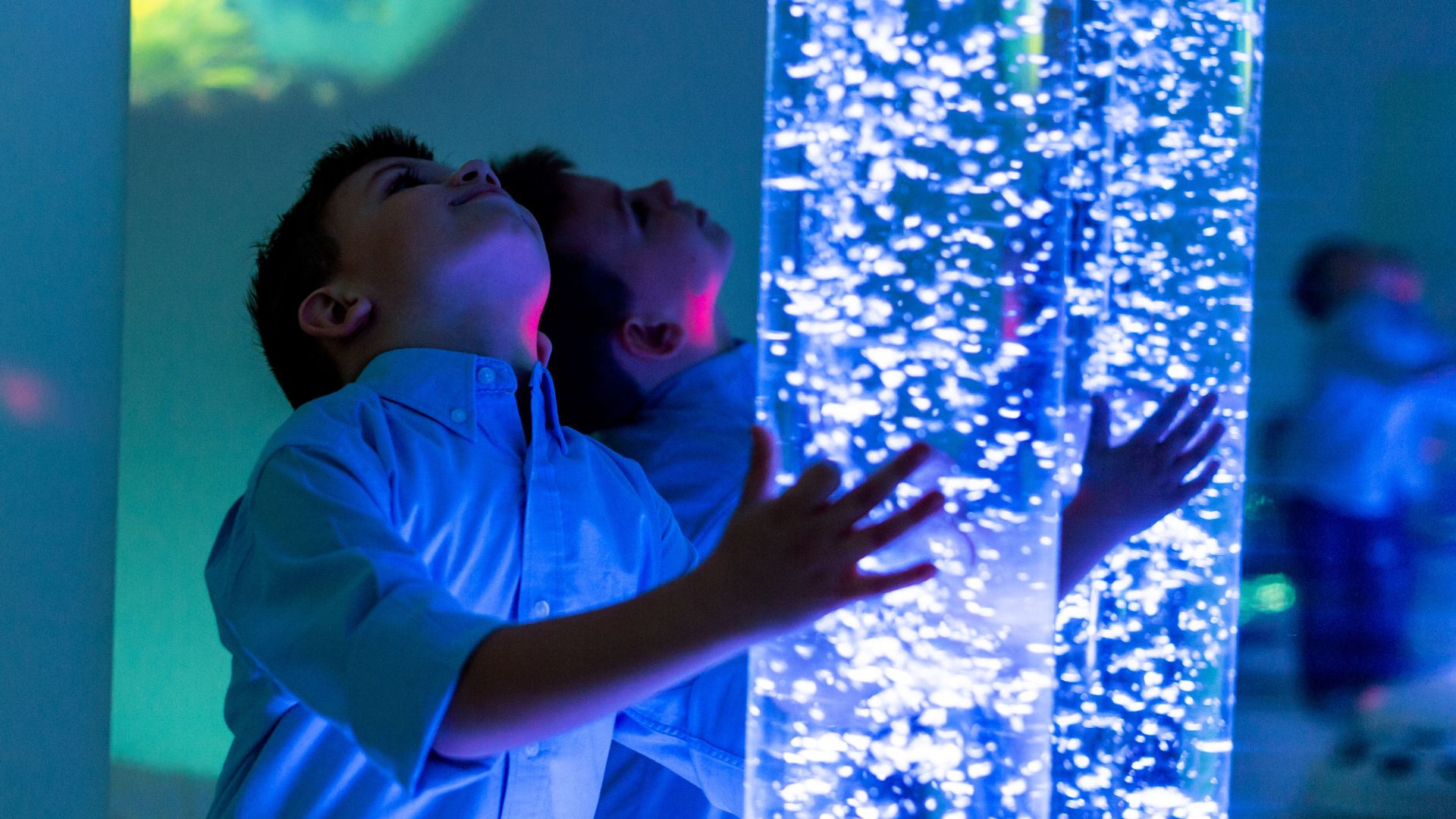
Therapy Clubhouse provides sensory integration therapy that blends neuroscience, child-led exploration, and compassionate family support. If your child struggles with transitions, emotional regulation, motor planning, or sensory overwhelm, early intervention can make a meaningful difference in their daily comfort and long-term development. Our team takes time to understand each child’s strengths, challenges, and sensory needs so we can create a therapy experience that feels safe, joyful, and empowering.
Families choose Therapy Clubhouse because we offer a sensory-rich environment filled with encouragement, connection, and evidence-based practice. We believe that every child deserves a place where learning feels exciting and where progress is celebrated with genuine pride. Our therapists guide families every step of the way, helping them understand their child’s sensory profile and supporting them through every stage of growth, both inside and outside the clinic.
If you are ready to learn how sensory integration therapy can support your child, contact Therapy Clubhouse today. Call (805) 624-3301 to schedule a consultation and speak with a Ventura County sensory integration therapist who is dedicated to helping your child thrive.