
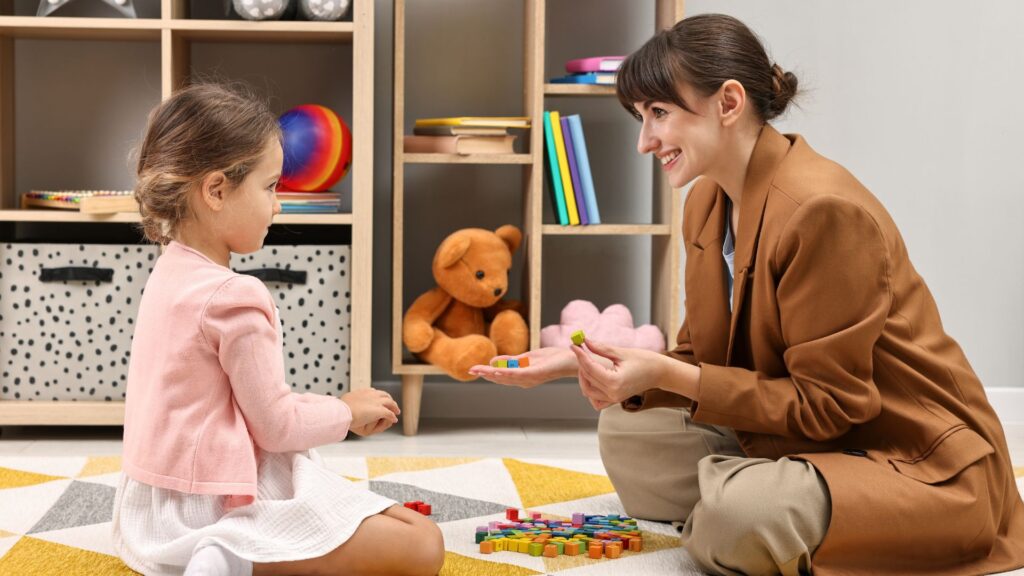
Early Start Denver Model Therapy for Children offers a way for young children to learn through joyful interaction, shared attention, and meaningful connection. This approach helps children develop communication, social engagement, and cognitive skills in a way that feels natural rather than pressured. At Therapy Clubhouse in Ventura County, we believe learning begins with warm relationships, and we help children discover their abilities through moments that feel inviting and filled with curiosity.
We created a space where early intervention feels hopeful and encouraging for families. Our team focuses on building trust, nurturing connection, and supporting each child’s unique developmental rhythm. ESDM sessions blend play and gentle structure so children feel safe enough to explore and confident enough to try new things. We help families understand how to use simple, everyday moments to support their child’s growth, which brings progress into daily routines in a way that feels natural and empowering for everyone.
If you would like to learn how Early Start Denver Model Therapy for Children can support your child, our team at Therapy Clubhouse would love to help. You can reach us at (805)624-3301 or visit our contact page to begin with a conversation that feels welcoming, reassuring, and centered on your child’s potential.

Early Start Denver Model therapy supports children during the most important years of development by helping them learn through shared joy, connection, and meaningful experiences. Young children grow rapidly during early childhood, and this approach nurtures that growth by focusing on engagement, communication, play, and relationships. Each session encourages children to explore the world around them in ways that feel natural and comforting. As children build skills through familiar routines and interactive moments, they begin to understand their abilities and approach new experiences with confidence.
At Therapy Clubhouse, we use ESDM to support the developmental foundations that shape communication, cognitive growth, emotional understanding, and social interaction. Every child arrives with their own unique strengths and rhythm, and ESDM meets them at their developmental level so they can learn at a pace that feels safe. By blending evidence-based practices with warmth, encouragement, and playful engagement, we help children build skills they can carry into everyday life. Families often notice that these small but meaningful shifts lead to greater curiosity, stronger connection, and a more confident approach to the world.
Young children learn best when experiences feel enjoyable and emotionally connected. ESDM uses meaningful interactions to help children develop skills through shared attention, imitation, gestures, play, and early communication. These experiences strengthen the foundations that support later learning and help children make sense of the world. When children feel supported by calm guidance and responsive engagement, their confidence grows and they begin to participate more actively. Over time, these small moments build into meaningful developmental progress.
Shared attention helps children learn by focusing on a moment together with someone they trust. When a child and therapist pay attention to the same object or action, it creates opportunities for interaction and early communication. These shared moments help children understand how to connect with others.
Shared attention encourages children to explore because they feel guided and supported. As they develop trust in these interactions, their curiosity grows and learning feels more natural.
Simple interactions, such as taking turns or copying a gesture, become powerful learning opportunities. These moments help children practice communication, problem solving, and early social engagement. When children experience success in these interactions, they gain confidence that supports continued growth.
Repetition helps children recognize patterns and understand how experiences link together. Each time they repeat an action, their understanding deepens and becomes more familiar.
Communication and cognitive development are deeply connected, and ESDM supports both by nurturing curiosity and helping children understand how their actions create meaning. Children learn that their gestures, sounds, and expressions matter and that they can use them to interact with others. These early communication skills become the building blocks for language, social connection, and problem solving. As children begin to use new skills during play and daily routines, their ability to understand, respond, and engage grows steadily.
Children feel more comfortable communicating when guidance is gentle and responsive. By acknowledging their efforts, we encourage them to explore new ways of expressing themselves. This approach builds trust and helps communication develop naturally.
Responsive interaction helps children use their voice with more confidence. When adults respond with warmth and interest, children become more motivated to communicate.
Play helps develop cognitive skills by allowing children to explore cause and effect, sequence events, and solve simple problems. Through playful experiences, children learn to imitate, experiment, and discover new ideas. These skills support early learning and prepare children for more complex thinking as they grow.
Curiosity motivates children to observe their surroundings and try new actions. As they explore, they gain a clearer understanding of how the world works.
Play is the heart of Early Start Denver Model therapy because it reflects the way young children naturally learn and make sense of the world. When play becomes the foundation for skill development, children feel safe enough to participate, curious enough to explore, and motivated enough to engage in new experiences. Through this joyful approach, learning feels like a shared adventure where discoveries unfold naturally. Children begin to understand communication, social connection, and problem solving through activities that feel familiar and comforting rather than structured or demanding.
At Therapy Clubhouse, we use play to create meaningful learning moments that match each child’s developmental needs. Play invites children to look, reach, laugh, imitate, and connect in ways that build early developmental foundations. When children enjoy the experience, they remain engaged long enough for new skills to take shape. This approach blends scientific understanding with warm, responsive interaction so children experience learning in a way that feels both natural and supportive.
Play offers endless opportunities for learning because it encourages children to explore freely while staying emotionally connected to the people around them. In ESDM sessions, therapists follow the child’s interests, allowing curiosity to lead the way. These moments allow communication, imitation, and social engagement emerge naturally. Within joyful interactions, children begin to understand how their actions create connection. Over time, children build confidence in their ability to communicate and participate more actively.
Shared play helps children feel seen, supported, and included. When a therapist joins a child’s play in a genuine and responsive way, it creates a sense of partnership. This connection helps children learn because they feel emotionally safe and willing to follow the therapist’s lead.
Connection draws children into the interaction and helps them stay present. When children feel understood, their interest grows and they participate with more comfort and curiosity.
Following the child’s lead shows them that their ideas matter. By building on what naturally interests them, we create a learning experience that feels fun and motivating. This approach helps children stay engaged long enough for new skills to become familiar and meaningful.
A child’s interests direct our teaching moments in ways that feel authentic. When children enjoy the activity, they practice new skills with greater confidence and enthusiasm.
Joy is an essential part of learning for young children because it fuels curiosity and encourages active participation. During ESDM sessions, joyful moments are intentionally created through warm interaction, playful discovery, and shared enjoyment. With trusted adults present, children become more open to communication, imitation, and new social experiences. As these joyful interactions repeat, they become powerful building blocks for early developmental growth.
Positive experiences help children understand that communication is meaningful and rewarding. Simple moments like sharing a smile or exchanging a sound become opportunities for early language learning. These interactions show children that their attempts to communicate matter and will be met with warmth.
Joy naturally encourages children to make sounds, gestures, and expressions. These vocalizations become early steps toward communication and social engagement.
Play based interaction helps children learn how to solve problems, make choices, and understand simple cause and effect relationships. These cognitive skills develop naturally as children experiment with toys, movement, and imaginative activities. When guided with gentle support, these moments help children build the foundations for later learning.
Exploration invites children to notice patterns, test ideas, and understand outcomes. These early discoveries help strengthen cognitive pathways that support growth in communication, play, and daily routines.
Communication grows through warm, responsive moments where children feel safe enough to share their attention, their interests, and their joy. Early Start Denver Model therapy supports these early steps by creating interactions that feel meaningful and emotionally engaging. Young children learn to connect through shared play, imitation, and the simple delight of being understood. When a child experiences connection in these moments, early communication skills begin to take shape. These skills help children understand how to express themselves, respond to others, and participate in the world around them.
At Therapy Clubhouse, we nurture early communication and social engagement by tuning in to each child’s cues and inviting them into interactions that feel fun and comfortable. In ESDM, communication is not taught through drills. Instead, it grows naturally through shared experiences, playful exchanges, and gentle guidance. Children become more aware of how their sounds, gestures, and expressions impact the people around them. As they discover that communication creates connection, they begin using these skills with more confidence in daily life.
Social connection develops when children feel understood and supported in their interactions. Early Start Denver Model therapy focuses on helping children enjoy moments of shared attention, mutual engagement, and reciprocal play. These foundational experiences teach children that relationships are enjoyable and safe. As children experience more of these social exchanges, they begin to look for opportunities to connect. This shift strengthens their ability to participate in family routines, play with peers, and interact with caregivers in meaningful ways.
Shared attention helps children experience the joy of noticing something together. When a child and therapist focus on the same toy or action, it creates a moment of connection that supports early social understanding. These interactions show children how to respond to and initiate engagement.
Joint attention invites children to join in and become active participants in the moment. As they respond to another person’s actions, they build a stronger sense of connection and shared enjoyment.
Early social skills develop through simple interactions such as exchanging smiles, copying actions, or taking turns during play. These moments help children understand how relationships work. When a child experiences success in these interactions, they become more confident in their ability to connect with others.
Predictable interaction gives children a sense of what to expect during social moments. As these experiences repeat, children begin to feel more comfortable and willing to participate.
Early communication develops when children understand that their voice, gestures, and expressions carry meaning. ESDM encourages communication by creating moments where a child’s attempts are acknowledged with warmth and enthusiasm. Within this responsive environment, children experiment with new sounds, gestures, or facial expressions. As awareness grows, these attempts become more intentional as children notice how their communication affects the interaction. This progression helps children develop the foundations needed for early language and social understanding.
Children feel more comfortable communicating when support is calm and encouraging. Recognizing their attempts, even when they are small, helps build trust and confidence. This gentle guidance helps communication grow at a pace that feels right for the child.
Positive interaction motivates children to communicate because they feel rewarded by the connection. When their efforts lead to shared enjoyment, they become more willing to express themselves.
Playful exchanges help children develop early language skills through imitation, shared sounds, and simple back-and-forth interactions. These experiences show children how communication fits naturally into play. As they practice these skills, they begin to use them in more meaningful ways during everyday moments.
Repetition helps children understand that communication has purpose and predictability. As they repeat actions that lead to connection, their confidence grows and communication becomes more consistent.

Families trust Therapy Clubhouse for Early Start Denver Model therapy because they want a place where their child feels deeply supported, seen, and understood. ESDM relies on warm, responsive interaction, and our environment is built to make those moments feel natural and joyful. When families walk through our doors, they enter a space designed for comfort and exploration, where every detail supports emotional safety and early developmental learning. This sense of trust grows as caregivers watch their child form meaningful connections, discover new abilities, and participate with confidence during sessions.
Trust is also built through the partnership we create with families. Early intervention can feel overwhelming, especially when parents are unsure what their child needs or how progress will unfold. We take time to guide families through each step of the process, offering reassurance and clarity along the way. Our team listens carefully, explains ESDM strategies in approachable ways, and helps families feel capable of using these tools at home. This collaborative relationship helps parents feel supported and confident, which strengthens their child’s overall progress and creates a positive experience for the entire family.
Children learn best when they feel comfortable, and our environment is carefully designed to support that comfort. The sensory gym, open play spaces, and cozy therapy rooms create a setting where learning feels enjoyable rather than intimidating. Each area encourages children to explore at their own pace while feeling grounded in familiar surroundings. These spaces allow children to discover new interests, practice early skills, and build confidence as they engage in playful activities that match their developmental needs.
Warm, inviting spaces help children settle into sessions with ease. When children feel relaxed, they are more open to shared interaction and more willing to explore new experiences. This emotional comfort becomes the foundation for successful ESDM learning moments.
Comfort helps children participate more freely and confidently. When they feel safe, their willingness to try new skills increases naturally.
Our environment offers opportunities for movement, sensory regulation, and playful exploration. These elements help children maintain attention during sessions, making learning opportunities more meaningful. Each space is designed to support early developmental stages in ways that feel gentle and encouraging.
Flexible spaces allow children to transition between activities that match their energy and comfort level. This adaptability helps children build skills without feeling overwhelmed.
Families play an essential role in early intervention, and we support them with warmth, clarity, and steady encouragement. We understand that early childhood development can bring many questions, and we take time to help families feel informed and confident from the start. By offering guidance and celebrating progress together, we create a shared experience that helps families feel connected to their child’s growth. This partnership strengthens the impact of ESDM and fosters emotional ease throughout the journey.
Clear guidance helps families understand what is happening during therapy and why certain strategies are used. When caregivers know what each step means, they can support their child with greater confidence at home. This clarity creates consistency across environments, which helps children practice new skills naturally.
Understanding invites families to participate more actively. When parents feel informed, they feel ready to support their child in meaningful ways.
Collaboration between therapists and families builds trust by creating an open space for questions, concerns, and shared celebrations. We work together to track progress and adjust strategies in ways that honor the child’s individuality. This collaborative spirit helps families feel uplifted and reassured.
Partnership provides a consistent framework for early developmental progress. When families and therapists work together, children experience steady support that builds toward long term success.
Your child deserves a place where growth feels joyful, safe, and supported by people who understand their unique way of learning. At Therapy Clubhouse, our Early Start Denver Model approach helps children discover new connections, explore their abilities, and participate with confidence. We would be honored to join your family on this meaningful path and provide care that feels warm, uplifting, and attuned to your child’s developmental needs.
If you are ready to learn how our team can support your child through Early Start Denver Model therapy, we welcome you to reach out. A member of our staff is here to answer your questions, offer guidance, and help you take the next steps with reassurance and clarity. Connect with Therapy Clubhouse today at (805)624-3301 or visit our contact page and begin a journey toward growth that feels hopeful and grounded in connection.