
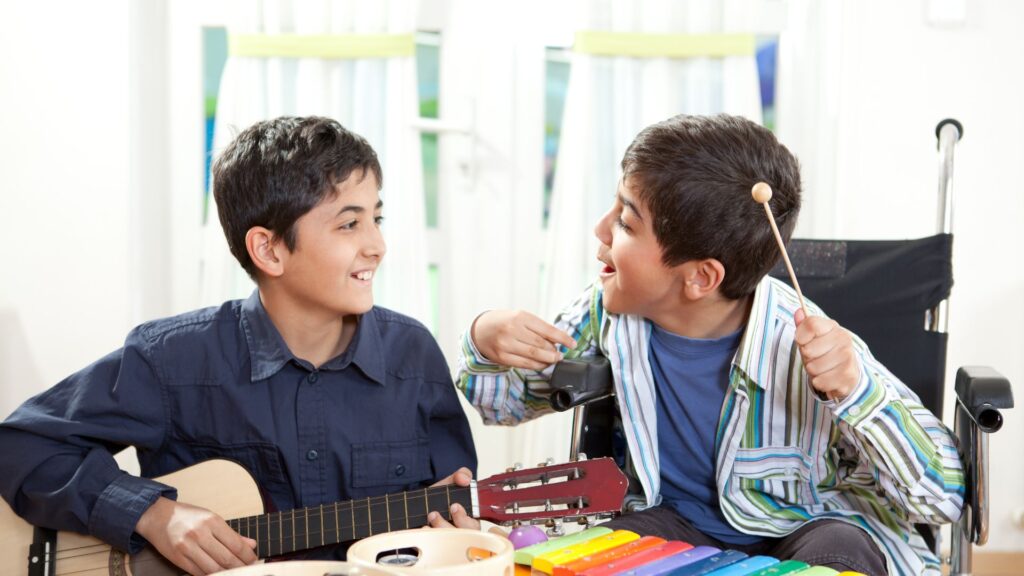
Music Therapy for children offers a gentle and engaging way for kids to explore communication, emotion, and movement through rhythm. At Therapy Clubhouse in Ventura County, we use music to help children experience the comfort of predictable patterns and the excitement of creating something alongside someone who understands them. Songs, instruments, and playful musical moments become pathways for connection, helping children engage in ways that feel meaningful.
We designed our environment to support children as they explore sound and rhythm at a pace that feels safe and encouraging. Music helps children express themselves when words are still developing, and it creates opportunities for shared moments that build confidence and emotional understanding. If you would like to see how Music Therapy for children can support your child’s growth, we would love to help. You can reach us at (805)624-3301 or visit our contact page to begin a conversation that feels hopeful, reassuring, and centered on your child’s unique voice.

Social connection grows when children feel safe enough to notice another person, respond to their presence, and share a moment that feels enjoyable and meaningful. Music Therapy for children creates many opportunities for these early connections to form because music naturally brings people together. When children explore sounds, rhythms, and simple musical play with someone who understands them, they begin to discover how comforting and exciting shared experiences can be. These shared moments become the foundation for communication, engagement, and relationship building. At Therapy Clubhouse, we help children explore music in ways that make connection feel inviting and accessible so they can participate with curiosity and confidence.
Music gives children a gentle way to enter interactions without feeling overwhelmed. Predictable patterns, repeating rhythms, and playful sounds help children feel grounded as they learn how to connect with others. Even small exchanges, such as tapping a drum while a therapist taps back or listening to a song together, help children experience what it feels like to share attention. As these experiences become familiar, children begin to look toward their therapist more often, anticipate what will happen next, and join in with greater ease. This process helps social connection grow naturally and supports the foundations needed for communication and emotional understanding.
Shared musical engagement helps children experience connection in simple, joyful ways. When a therapist and child explore sounds together, they create a shared moment where attention, emotion, and curiosity meet. Children often respond to rhythm before they respond to words, which makes music a powerful invitation to interact. These early exchanges show children that connecting with someone else can feel safe and enjoyable. Over time, shared musical moments help children recognize patterns, anticipate responses, and stay engaged longer during play.
Musical interaction encourages children to look toward another person and notice what they are doing. When a child hears a sound or sees a movement connected to the music, it invites them to observe and participate. These small moments build the foundations of joint attention and social awareness.
Joint action helps children feel involved in a shared experience. As they participate, their interest in connecting with others grows.
Rhythmic play brings consistency and predictability to interactions. Children learn to anticipate beats, respond to pauses, and share excitement through simple rhythmic exchanges. These shared experiences help children feel more connected to the person playing with them.
Predictable rhythms help children feel secure in the interaction. As they begin to understand the pattern, they join in with more confidence.
Turn taking is a key part of social development, and music makes the process easier for children who are still learning how to participate in back and forth interaction. In Music Therapy for children, turn taking often happens naturally. A child might shake a tambourine, pause, and wait for the therapist to respond with a sound of their own. This simple exchange teaches children how to wait, respond, and enjoy the shared moment. These early patterns of reciprocity help children understand that communication is not one sided but shared between two people. As turn taking becomes familiar, children begin to follow social cues more easily in other situations.
Musical pauses help children understand when it is their turn to act. The rhythm of a song or activity guides them gently through the interaction. With repeated experience, they begin to anticipate these moments with increasing accuracy.
Timing teaches children when to participate. As they grow more comfortable, they begin to respond with greater ease and intention.
Sound imitation helps children learn how to copy simple actions using instruments or vocal sounds. When children imitate a therapist’s sound, they create a shared experience that feels playful and connected. This imitation builds confidence and strengthens early social skills.
Imitation helps children understand how interactions flow. By copying a sound or action, they practice responding in a coordinated and meaningful way.
Relationships grow through moments of joy, comfort, and shared attention, and music creates many opportunities for these moments to appear. When children smile during a familiar song, clap along with a rhythm, or explore an instrument beside someone they trust, they begin to understand how enjoyable connection can be. These experiences help children associate relationships with safety and warmth rather than confusion or uncertainty. At Therapy Clubhouse, we celebrate these moments because they represent meaningful steps toward deeper social engagement.
Musical enjoyment gives children positive associations with social interaction. When children feel good during shared musical play, they are more likely to seek out similar interactions again. These enjoyable moments help strengthen emotional bonds.
Positive experiences encourage children to continue exploring connections. When they enjoy interacting, they become more motivated to communicate.
Familiar songs help children know what to expect and create routines they can rely on. These shared rituals help children join in with comfort and anticipation. As these songs become meaningful, they support ongoing connection.
Rituals help children feel included in predictable interactions. This predictability encourages participation and strengthens early social development.
Emotional development begins with the simple ability to notice feelings, respond to them, and find comfort in moments that feel overwhelming. Music Therapy for children helps kids explore these abilities in a gentle and engaging way. Music offers structure, predictability, and warmth, which helps children feel safe enough to express themselves. When a child hears a calming rhythm or participates in a shared musical activity, their body often responds with greater ease. At Therapy Clubhouse, we use these moments to help children understand their emotions and discover new ways to regulate themselves through supportive interaction.
Emotional regulation develops gradually as children learn what helps them settle, reconnect, and move through their feelings. Music Therapy for children creates opportunities for children to experience soothing patterns, expressive sounds, and moments of shared comfort. These experiences help children begin identifying what emotions feel like and how to respond in ways that bring relief. Our therapists guide children through musical experiences that match their needs, whether they require calming support or playful engagement. Over time, these musical interactions help children understand their internal world more clearly and navigate emotional moments with growing confidence.
Rhythm provides a steady foundation that helps children feel grounded in their bodies. When children hear or create a predictable beat, it offers a sense of stability that can ease emotional overwhelm. Many children respond naturally to rhythm because it mirrors familiar patterns found in early development, such as rocking, heartbeat sounds, or gentle movement. These rhythms help children slow down, settle their attention, and regulate their emotions more easily. Through repeated exposure to rhythmic experiences, children begin to understand how certain patterns bring comfort and help them feel more secure.
Consistent beats help children find comfort by offering a familiar pattern to follow. They provide structure during moments that may otherwise feel confusing or overstimulating. As children settle into these rhythms, they begin to feel more at ease within the interaction.
Calm rhythms give children a steady anchor during emotional moments. This anchor helps them regain control and move through strong feelings with support.
Rhythmic play helps children express feelings they may not yet have words for. Drumming softly, tapping a beat, or shaking a gentle instrument gives children a safe outlet for their emotions. These movements help them release tension and communicate in ways that feel manageable.
Expression helps children understand that emotions can be shared safely. This awareness supports healthier responses to emotional moments.
Emotional safety grows when children feel supported, understood, and free to explore their feelings without judgment. Music Therapy for children creates these moments by pairing soothing sounds with warm, attuned interaction. When a therapist mirrors a child’s rhythm, joins their musical play, or responds gently to their cues, the child begins to feel emotionally held. These shared experiences help children understand that they are not alone in their feelings and that connection can bring comfort. Emotional safety established in musical sessions often carries into other parts of the child’s day, supporting stronger emotional communication overall.
Attuned responses show children that their emotions are noticed and accepted. When a therapist gently matches the child’s energy or supports their expression through music, the child feels seen. This recognition encourages them to trust the interaction.
Feeling understood gives children confidence to explore more emotional expression. Openness strengthens the foundation for emotional growth.
Music supports co-regulation by helping children share emotional rhythms with another person. A therapist may slow the music to encourage calm or brighten the rhythm to guide engagement. These musical adjustments help children find balance while feeling supported.
Co-regulation helps children feel more capable during emotional moments. This growing confidence becomes a tool they can use beyond the session.
Musical expression offers children a powerful way to explore and communicate their emotions. When words are difficult or feelings are overwhelming, music provides a channel where children can release energy and express themselves authentically. Through singing, instrument play, or simple vocal sounds, children learn how different emotions can be expressed safely. Music gives them a way to explore what sadness, excitement, or uncertainty might feel like in their bodies. As children practice expressing these feelings within the support of a therapeutic relationship, they begin to understand their emotions more clearly and navigate them with greater ease.
Creative exploration helps children notice how different musical sounds match different emotional states. Slow melodies may feel calming, while fast rhythms may reflect excitement. These experiences give children a concrete way to identify what they feel inside.
Identification helps children understand the shape of their emotions. This insight makes it easier for them to respond to feelings in healthy ways.
Musical choices let children take an active role in regulating their emotions. Choosing a soothing instrument or requesting a lively song helps them influence the way they feel. This empowerment builds confidence in their ability to manage emotional moments.
Choice making helps children feel capable and confident. As they make more choices, they discover how to support themselves emotionally.
Families choose Therapy Clubhouse because they want their child to grow in an environment that feels warm, nurturing, and filled with genuine celebration. Music Therapy for children flourishes in settings where emotional safety comes first, and we take great care to create a space where kids feel free to explore sound, movement, and expression. Our rooms are designed to feel welcoming rather than clinical, which helps children settle into each session with curiosity. When children feel supported in this way, music becomes a bridge that connects them to others and invites them into moments of shared engagement. This foundation allows Music Therapy for children to unfold in a way that feels natural, joyful, and deeply meaningful.
Families also trust Therapy Clubhouse because they see how thoughtfully our team responds to each child’s needs. We know that every child expresses themselves differently, and Music Therapy for children gives us a beautiful way to honor those differences. Some children respond to soft rhythms, others to lively movement, and many to the steady comfort of a familiar song. Our therapists listen closely and shape each session around the child’s emotional cues, which helps them feel safe as they explore new ways of connecting. This individualized approach makes Therapy Clubhouse a supportive and uplifting place for families seeking Music Therapy for children that reflects both compassion and expertise.
The environment at Therapy Clubhouse plays a central role in helping children open up to the experiences offered through Music Therapy for children. We designed our spaces to encourage exploration through sound, gentle movement, and playful interaction. Children can discover instruments, listen to different rhythms, or engage in simple musical routines without feeling pressured. When an environment feels warm and inviting, children participate more freely and show greater willingness to connect. This sense of safety becomes the starting point for building social, emotional, and communication skills through music.
Calm and playful spaces help children approach Music Therapy for children with curiosity. Soft lighting, open areas, and sensory friendly features give children the comfort they need to begin exploring. When children feel relaxed, their attention naturally shifts toward the musical experiences offered in the session.
Comfort helps children explore sound without hesitation. As confidence grows, they become more willing to participate in shared musical activities.
Predictable settings help children understand what to expect during Music Therapy. Familiar routines, consistent musical cues, and repeated songs help children feel secure. This predictability supports steady engagement and allows deeper connection during each session.
Familiar routines reduce uncertainty and encourage children to return to the activity. This confidence helps them build stronger communication and emotional skills through music.
Families trust our team because of the warmth, attunement, and joy we bring into every session. Music Therapy is most effective when therapists respond to a child’s cues with sensitivity and care. Our therapists notice when a child begins tapping to a beat, smiling during a favorite song, or showing interest in an instrument. These moments become opportunities to build connection, and our team responds with gentle encouragement. This style of interaction helps children understand that musical communication is safe, inviting, and worth exploring. Over time, these meaningful connections help children build confidence in both social and emotional expression.
Attuned interaction allows therapists to follow the child’s lead during Music Therapy. By matching the child’s rhythm, responding to their movements, or echoing their sounds, the therapist creates a sense of shared experience. This connection helps children understand the collaborative nature of music.
Attunement shows children that they are understood. This trust encourages deeper participation and emotional expression.
Encouragement helps children feel proud of their musical attempts. When a therapist celebrates a child’s rhythm, vocalization, or instrument play, the child begins to associate music with positive interaction. These affirming experiences help children develop stronger communication and emotional skills.
Celebration helps children recognize their accomplishments. This confidence inspires more communication through musical play.
Therapy Clubhouse is a supportive place for families because we believe that parents should feel guided, understood, and encouraged throughout their child’s journey. Music Therapy can feel new to many caregivers, and we take time to explain each step in a warm and accessible way. Families learn how simple musical moments can foster connection at home, from humming during transitions to sharing a favorite tune before bedtime. These small practices help carry the benefits of Music Therapy into daily routines. As families notice their child responding more openly to music and shared engagement, they begin to feel more confident in how to support emotional and communication development at home.
Clear communication helps caregivers understand how Music Therapy supports emotional growth and connection. We share observations, answer questions, and provide simple ideas that families can use at home. This guidance helps parents feel involved in their child’s progress.
Understanding allows caregivers to feel more capable. As confidence grows, families become active partners in their child’s musical development.
Families often find encouragement when they see their child respond to music with joy, curiosity, or comfort. These moments show parents that progress is happening in meaningful ways. When families feel encouraged, they become more engaged in the therapeutic process and more hopeful about their child’s growth.
Hope gives families strength during the learning process. This steady support fosters consistency across therapy and home life.
Music Therapy for children can open new pathways for connection, expression, and emotional comfort. At Therapy Clubhouse, we help children experience the joy of music in a setting that feels warm and supportive. Each musical exchange offers a chance to strengthen communication, build confidence, and explore feelings in ways that feel safe. Our goal is to create a space where your child can thrive through rhythm and shared engagement.
If you feel ready to explore how Music Therapy can support your child, we would love to talk with you. Our team is here to answer questions, offer encouragement, and guide you toward the next steps with clarity and care. Reach out to Therapy Clubhouse at (805)624-3301 or visit our contact page to begin a journey that brings comfort and joyful discovery into your child’s world.