
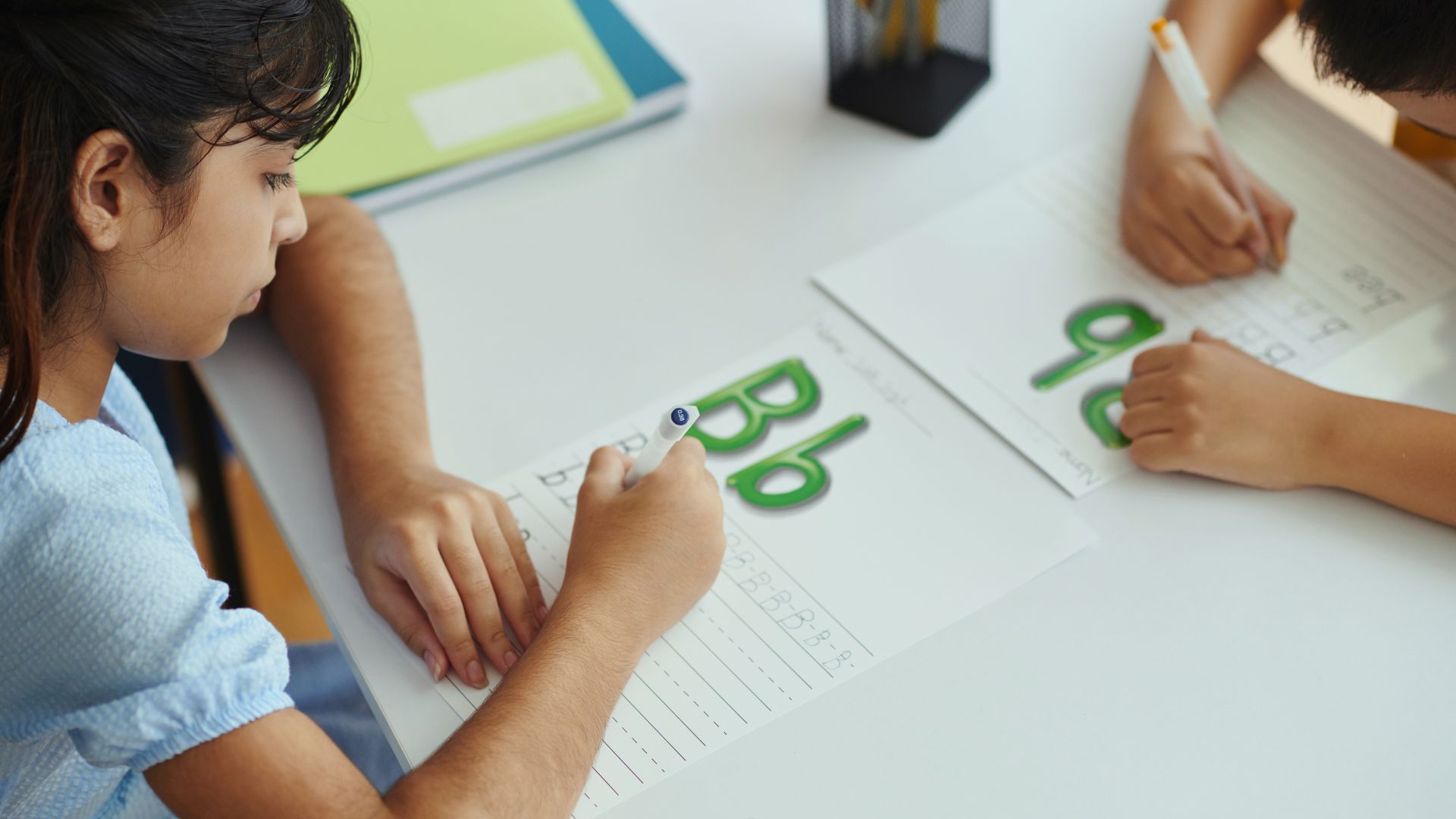
Handwriting plays a critical role in a child’s academic success, confidence, and daily school experience. When writing feels difficult, slow, or frustrating, children may fall behind in the classroom even when they understand the material. Ventura County Handwriting Therapy at Therapy Clubhouse focuses on helping children develop the fine motor strength, coordination, and visual motor skills needed to write clearly and efficiently. Through pediatric occupational therapy, children gain the foundational skills that support handwriting, classroom participation, and long-term independence.
Many children struggle with letter formation, spacing, pencil grip, or writing endurance due to developmental delays, sensory processing challenges, or differences in motor planning. These challenges often appear during preschool or early elementary years and can worsen as academic demands increase. Therapy Clubhouse provides handwriting therapy designed specifically for children in Ventura County, using evidence-based occupational therapy strategies that feel playful, supportive, and encouraging rather than clinical or overwhelming.
Our pediatric occupational therapists take a child-centered approach that meets each child where they are developmentally. Handwriting therapy sessions build strength, coordination, and confidence while reducing frustration and avoidance. Therapy Clubhouse creates an environment where children feel safe practicing new skills and parents feel supported throughout the process.
If your child struggles with handwriting, fine motor skills, or written schoolwork, call Therapy Clubhouse today at (805) 624-3301 to speak with our team and schedule a handwriting therapy evaluation in Ventura County.
Handwriting therapy is a specialized service within pediatric occupational therapy that helps children develop the physical, sensory, and cognitive skills required for successful writing. In Ventura County, many children experience handwriting difficulties that affect school performance, confidence, and willingness to participate in classroom activities. Handwriting therapy focuses on building the underlying skills that make writing feel more natural, organized, and less exhausting for children at every developmental stage.
At Therapy Clubhouse, handwriting therapy goes beyond practicing letters on paper. Our occupational therapists address the root causes of writing challenges, including fine motor weakness, poor motor planning, visual motor integration difficulties, and sensory processing differences. By strengthening these foundational skills, children gain the ability to write more clearly, comfortably, and efficiently across school and home environments. The American Occupational Therapy Association recognizes handwriting as a key functional skill supported through occupational therapy interventions for children, reinforcing the importance of early and individualized support.
Pediatric handwriting therapy supports far more than legible writing. Writing is a complex task that requires coordination between the hands, eyes, posture, attention, and cognitive processing. When one or more of these systems struggle, handwriting often becomes the visible problem even though deeper developmental factors are involved. Therapy Clubhouse helps children in Ventura County strengthen these systems so handwriting becomes a skill they can rely on rather than avoid.
As children improve their handwriting abilities, they often show gains in classroom engagement, task completion, and self-confidence. Writing becomes less mentally and physically demanding, allowing children to focus on learning new concepts instead of struggling to record their thoughts on paper.
Handwriting involves the integration of multiple developmental systems working together in real time. Children must maintain posture, stabilize their shoulders, control their hands, visually track their writing, and plan each movement in sequence. When any part of this process breaks down, handwriting quality and speed suffer.
Occupational therapists evaluate handwriting as a functional skill that reflects overall development. By addressing posture, core strength, bilateral coordination, and visual motor integration, handwriting therapy helps children build a solid foundation that supports academic success and everyday tasks beyond the classroom.
Fine motor control plays a significant role in how efficiently a child writes. Weak hand muscles or poor finger coordination can cause slow writing speed, inconsistent letter formation, and early fatigue. Children with fine motor challenges often struggle to keep up with written assignments, which may lead teachers to misinterpret ability or effort.
Handwriting therapy strengthens the small muscles of the hands through targeted occupational therapy activities. As fine motor control improves, children gain better endurance, improved pencil control, and increased confidence during classroom writing tasks.
Visual motor integration allows children to coordinate what they see with how they move their hands. This skill is essential for copying from the board, spacing letters correctly, and staying within writing lines. When visual motor integration is weak, handwriting may appear uneven, poorly spaced, or difficult to read.
Therapy Clubhouse uses evidence-based strategies to strengthen visual motor skills through play-based and structured activities. Improving this integration helps children write with greater accuracy and consistency, supporting both academic performance and self-esteem.
Handwriting challenges can emerge gradually or become more noticeable as school expectations increase. While occasional messiness is developmentally typical, ongoing difficulties with writing may signal the need for occupational therapy support. Early intervention through handwriting therapy can prevent frustration, academic delays, and negative associations with schoolwork.
Parents in Ventura County often seek handwriting therapy when teachers raise concerns or when children begin avoiding writing tasks at home. Occupational therapy provides clarity, guidance, and a structured plan for addressing these challenges effectively.
Early signs of handwriting difficulties include awkward pencil grip, excessive pressure on the paper, difficulty copying shapes or letters, and frequent complaints of hand pain during writing. Preschool-aged children may struggle with pre-writing skills such as drawing lines, shapes, or simple patterns, while elementary students may show inconsistent letter sizing or spacing.
Recognizing these signs early allows occupational therapists to support skill development before handwriting demands become overwhelming. Early handwriting therapy often leads to faster progress and stronger long-term outcomes.
Teachers are often the first to notice handwriting concerns due to daily classroom observation. Common red flags include slow writing speed, incomplete written assignments, avoidance behaviors, and declining academic confidence. These observations provide valuable insight into how handwriting challenges affect functional performance in real school settings.
Therapy Clubhouse collaborates with families to address teacher concerns and support children across environments. Handwriting therapy helps bridge the gap between classroom expectations and a child’s current developmental abilities, setting the stage for long-term success.
Many children in Ventura County experience handwriting difficulties that interfere with school participation, academic progress, and self-confidence. These challenges often stem from underlying motor, sensory, or coordination differences rather than a lack of effort or intelligence. Pediatric occupational therapists identify and treat these handwriting difficulties by addressing the root causes that make writing hard for children. Handwriting therapy focuses on improving functional writing skills so children can meet classroom expectations with less frustration and greater independence.
At Therapy Clubhouse, handwriting therapy begins with understanding how each child’s unique developmental profile affects writing. Some children struggle with physical aspects such as grip strength or endurance, while others experience challenges related to visual processing, motor planning, or attention. Addressing these handwriting difficulties early helps prevent academic setbacks and reduces the emotional impact that writing struggles can create.
An inefficient pencil grasp is one of the most common handwriting challenges seen in children receiving occupational therapy. When a child uses too much force, grips the pencil awkwardly, or relies on larger muscles instead of finger control, writing becomes tiring and uncomfortable. These patterns often lead to slow writing speed and reduced accuracy.
Handwriting therapy helps children develop a functional and comfortable grasp that supports efficient movement. Occupational therapists guide children through activities that strengthen hand muscles and encourage proper finger positioning, making writing feel easier and more controlled over time.
Inefficient grip patterns require more effort to produce each letter, which quickly leads to hand fatigue. Children may rush through assignments, avoid writing altogether, or complain of pain during schoolwork. As fatigue sets in, handwriting quality often declines, affecting legibility and overall performance.
Through structured handwriting therapy, children learn how to stabilize their hands and use appropriate finger movements. Improved grip efficiency allows children to write longer without discomfort, increasing endurance and consistency in the classroom.
Many children struggle to form letters correctly or maintain consistent size and shape. Letters may appear reversed, uneven, or poorly aligned, making handwriting difficult for teachers to read. These challenges often stem from delays in motor planning or difficulty visualizing how letters should be formed.
Occupational therapists address letter formation through step-by-step instruction combined with multisensory learning. Handwriting therapy reinforces correct movement patterns so children can produce letters accurately and automatically over time.
Proper spacing and alignment help make handwriting readable and organized. When letters and words crowd together or drift off the line, teachers may have difficulty assessing a child’s knowledge. Poor spacing can also make it harder for children to reread their own work, affecting comprehension and study skills.
Handwriting therapy focuses on visual organization skills that support spacing and alignment. As children gain better control over these elements, their written work becomes clearer and easier to evaluate, supporting academic success.
Line awareness refers to a child’s ability to keep letters positioned correctly on writing lines. This skill develops gradually and depends on visual motor integration and postural stability. Children with weak line awareness may write letters that float above or sink below the line inconsistently.
Occupational therapists strengthen line awareness through targeted visual and motor activities. Handwriting therapy helps children internalize spatial boundaries so writing becomes more organized and predictable.
Some children can write individual letters but struggle when asked to write full sentences or longer assignments. Writing may feel overwhelming due to the combined demands of spelling, organization, motor control, and sustained attention. These challenges often result in incomplete work and increased frustration.
Handwriting therapy supports children by breaking writing tasks into manageable steps and strengthening the underlying skills required for longer writing activities. Occupational therapy helps children develop the endurance and planning needed to complete written assignments more confidently.
When writing feels consistently difficult, children may begin avoiding tasks that involve handwriting. This avoidance can appear as behavioral challenges, emotional outbursts, or refusal to participate in schoolwork. Over time, these patterns can affect self-esteem and academic motivation.
Handwriting therapy addresses both skill development and emotional resilience. By making writing more accessible and achievable, Therapy Clubhouse helps children rebuild confidence and approach writing tasks with greater willingness and success.
Strong handwriting skills play a foundational role in school readiness and long-term academic success. Writing is one of the primary ways children demonstrate knowledge, follow instructions, and participate in classroom learning. When handwriting skills lag behind expectations, children may struggle to keep up even when they understand the material. Ventura County Handwriting Therapy, through occupational therapy, helps children develop the readiness skills needed to succeed in school with greater confidence and independence.
At Therapy Clubhouse, handwriting therapy supports children across developmental stages, from early learners preparing for school to elementary students facing increasing writing demands. Occupational therapy focuses on building strength, coordination, attention, and motor planning so children can meet academic expectations without unnecessary stress or fatigue.
Pre-writing skills form the building blocks for future handwriting success. These early skills include hand strength, coordination, visual tracking, and the ability to imitate basic shapes and lines. Children who enter school without these foundational abilities may struggle as soon as writing becomes a daily requirement.
Handwriting therapy helps younger children develop these essential skills through play-based occupational therapy activities. By strengthening pre-writing abilities early, children gain a smoother transition into formal handwriting tasks when they begin preschool or kindergarten.
Hand strength is essential for controlling writing tools and maintaining endurance during writing activities. Without sufficient strength, children may press too hard on the pencil, fatigue quickly, or avoid writing tasks altogether. Weak hand muscles can make even simple writing tasks feel exhausting.
Occupational therapists use targeted exercises and functional play activities to build hand and finger strength. These activities prepare children for writing by supporting proper grasp patterns and controlled movement before formal handwriting instruction begins.
Play-based occupational therapy allows children to develop critical skills while remaining engaged and motivated. Through games, sensory activities, and hands-on exploration, children strengthen fine motor control, coordination, and attention naturally and enjoyably.
Therapy Clubhouse integrates play into handwriting therapy to reduce pressure and increase learning retention. Children often show greater progress when therapy feels fun rather than repetitive or stressful.
As children progress through elementary school, writing demands increase significantly. Students must write longer sentences, complete timed assignments, and organize written responses across multiple subjects. Handwriting difficulties can interfere with performance and make schoolwork more challenging than necessary.
Handwriting therapy helps elementary-age students improve writing efficiency and clarity. Occupational therapy supports the skills required to keep pace with classroom expectations while reducing frustration and fatigue.
Homework and tests often require sustained writing under time constraints. Children with handwriting difficulties may rush, skip questions, or lose points due to illegible work rather than a lack of understanding. This can negatively affect academic performance and confidence.
Handwriting therapy addresses speed, endurance, and legibility to support the successful completion of written tasks. As writing becomes easier and more automatic, children gain the ability to focus on content rather than the mechanics of writing, leading to improved academic outcomes.
Handwriting therapy at Therapy Clubhouse follows an occupational therapy approach that focuses on the whole child rather than isolated writing skills. Writing is influenced by posture, sensory processing, attention, coordination, and motor planning, all of which occupational therapists address through individualized intervention. Ventura County families choose Therapy Clubhouse because handwriting therapy is tailored, evidence-based, and designed to support long-term functional success.
Our pediatric occupational therapists create therapy programs that reflect each child’s developmental profile, learning style, and daily demands. By addressing the underlying systems that support handwriting, occupational therapy helps children build skills that transfer from therapy sessions into the classroom and home environments.
Every child approaches handwriting with a unique set of strengths and challenges. Some children need support with hand strength and coordination, while others struggle with visual processing, attention, or sensory regulation. An individualized handwriting therapy plan ensures that therapy targets the most meaningful skills for each child.
Therapy Clubhouse develops personalized occupational therapy plans that evolve as the child progresses. This individualized approach allows children to build skills at an appropriate pace while staying motivated and engaged throughout the therapy process.
Children differ in developmental timelines, learning styles, and responses to intervention. A standardized handwriting program may overlook the specific factors that make writing difficult for a particular child. Occupational therapy recognizes these differences and adapts therapy accordingly.
By customizing handwriting therapy, occupational therapists can address challenges more efficiently. This personalized care leads to better outcomes and helps children develop confidence in their abilities rather than feeling compared to peers.
Pediatric occupational therapists rely on evidence-based interventions that support motor learning and skill generalization. These strategies are grounded in research and clinical experience, ensuring therapy aligns with best practices in pediatric development.
Handwriting therapy at Therapy Clubhouse incorporates structured practice, sensory integration, and functional activities. This combination allows children to learn new skills while applying them in meaningful contexts that mirror real-life writing demands.
Multi-sensory strategies engage more than one sense at a time to support learning. When children use touch, movement, vision, and proprioception together, motor patterns are easier to learn and retain. These strategies are especially effective for children who struggle with traditional paper-based instruction.
Occupational therapists use textured materials, movement-based activities, and hands-on exploration to reinforce handwriting skills. This approach helps children internalize correct movement patterns and improve writing accuracy.
Sensory input helps children understand how their bodies move in space and how much force to use during writing. Children with sensory processing differences may press too hard or too lightly on the pencil, affecting legibility and endurance.
Handwriting therapy incorporates sensory activities that improve body awareness and motor control. As sensory processing improves, children gain better regulation and consistency during writing tasks, leading to smoother and more controlled handwriting.

If your child struggles with handwriting, written schoolwork, or fine motor skills, early support can make a meaningful difference in confidence, academic performance, and daily routines. Handwriting challenges often affect more than just writing. They can impact attention, self-esteem, classroom participation, and a child’s willingness to engage in learning. Therapy Clubhouse provides Ventura County Handwriting Therapy through pediatric occupational therapy that focuses on skill building, encouragement, and long-term success.
Therapy Clubhouse creates a welcoming and supportive environment where children feel safe practicing new skills and parents feel informed and involved every step of the way. Our occupational therapists work closely with families to develop individualized handwriting therapy plans that align with each child’s needs and school expectations. Progress is celebrated, frustration is reduced, and children gain tools they can carry into the classroom and beyond.
To schedule a handwriting therapy evaluation in Ventura County, call Therapy Clubhouse today at (805) 624-3301. Our team is ready to answer your questions, guide you through the next steps, and help your child build the handwriting skills needed to succeed.