
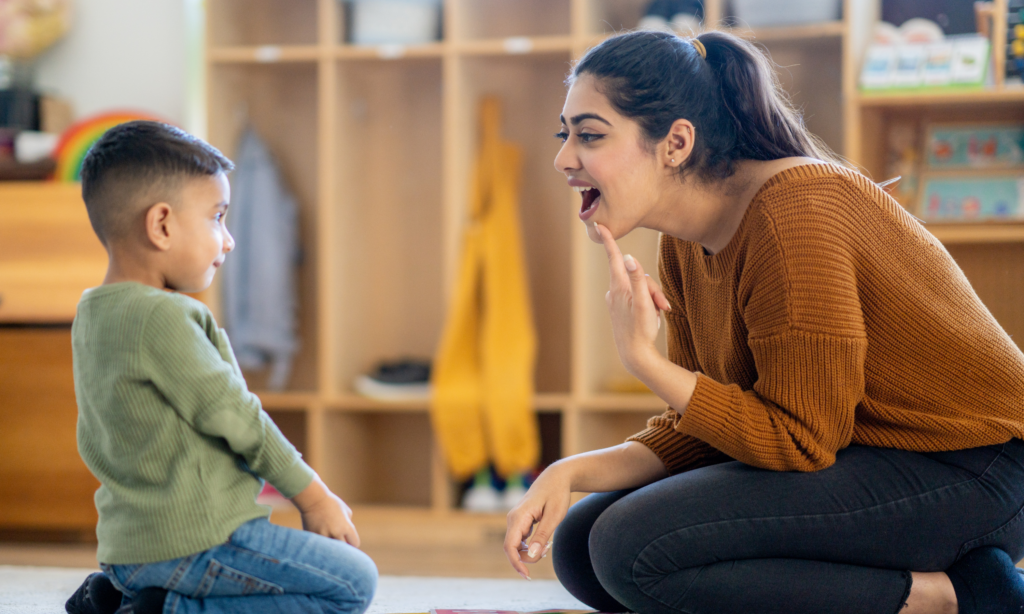
Articulation therapy in Ventura County can support your child when certain sounds feel difficult to produce or when speech clarity presents a challenge during everyday interactions. You might have noticed these differences during early conversations with your child, when they substitute sounds, leave off parts of words, or become frustrated when trying to communicate with others. These moments can bring up questions about development and whether extra support would help your child feel more confident expressing themselves. At Therapy Clubhouse, articulation therapy is designed to be gentle, playful, and aligned with your child’s natural learning style so progress feels achievable rather than overwhelming.
If you’re curious whether articulation therapy may be right for your child or simply want to understand how sound development works, our team is here to guide you. We offer both in-clinic and in-home sessions tailored to your child’s needs and comfort. To learn more about how Therapy Clubhouse can support your child’s speech development, call (805) 624-3301 to connect with our team and explore next steps.
If your child has difficulty producing certain sounds clearly, they may repeat words often, avoid speaking in longer sentences, or become frustrated when others cannot understand them. Articulation therapy focuses on helping children learn how to form sounds accurately so their speech feels more natural, confident, and easier to understand. Speech sound disorders are common in early childhood, and they appear in many different ways. Some children replace sounds with simpler ones, while others omit sounds altogether. Whatever the pattern may be, articulation therapy provides structured yet gentle support that helps your child build the clarity they need to express themselves with comfort.
Understanding speech sound development can help you recognize why your child may be struggling. Producing speech sounds requires coordination between the tongue, lips, jaw, and breath. When one part of that process feels difficult, clear speech becomes harder to achieve. At Therapy Clubhouse, we help your child build these motor patterns gradually through repetition, modeling, and play-based practice. The goal is that over time, your child will begin forming sounds more consistently and speaking with greater ease.
Speech sound disorders occur when a child has difficulty producing individual sounds or groups of sounds in a developmentally typical way. Some children struggle with articulation, meaning the physical production of sounds is unclear or inaccurate. Others show phonological patterns, in which sound errors follow predictable rules or simplifications. Both types can affect communication, but each child’s pattern tells a different story about how they are learning and processing speech.
An articulation difficulty may include trouble producing sounds like r, l, s, or th, or difficulty forming sounds that require precise tongue placement. A phonological challenge may include patterns such as substituting a front sound for a back sound, simplifying blends, or reducing complex sound combinations. Each child’s pattern provides insight into how their brain organizes speech sounds, guiding the type of therapy they may need.
Producing clear speech requires coordinated movement of the mouth, jaw, and tongue. If your child has difficulty sequencing these movements, they may struggle with particular sounds or sound combinations. Therapy helps build the motor planning needed for clearer production by practicing sounds in isolation, in words, and eventually in longer phrases.
Some children need more time to understand how sounds feel and where their tongue or lips should be placed. These children benefit from exercises that highlight sound placement through visual models or playful tactile cues. When your child understands how a sound is made, practicing becomes much more approachable.
Children with unclear speech may become frustrated when peers or adults ask them to repeat themselves. This frustration can influence their willingness to participate in conversations, share ideas, or answer questions. Understanding the root of their challenges can help you support them with patience and empathy during daily communication.
Articulation therapy in Ventura County supports your child in learning how to produce sounds more accurately through structured practice that remains developmentally appropriate. The process often begins with assessing which sounds your child struggles with and identifying the patterns behind those difficulties. From there, therapy targets individual sounds, helping your child practice them at a pace they can manage. Over time, these sounds become more automatic, appearing naturally during everyday speech.
Therapists use modeling, repetition, and visual cues to help children learn new sound patterns. As your child begins producing sounds accurately in isolated practice, those skills expand to syllables, words, and short phrases. This gradual progression helps your child feel successful at each stage, reducing frustration and encouraging participation.
Play allows children to practice sounds in a natural context, helping them feel more engaged and less pressured. Whether your child is naming objects, describing actions, or participating in imaginative play, they are practicing articulation in a way that supports generalization. The more meaningful the practice feels, the more easily your child uses these skills outside of therapy.
Some children produce clearer sounds when their bodies feel regulated. Movement activities, sensory materials, or calming strategies may be included in sessions to support comfort and attention. When your child’s body feels grounded, learning new sounds becomes easier.
Once a child can produce a sound accurately in single words, therapy helps them use the sound naturally in conversation. This step can feel challenging because connected speech requires quick transitions between sounds. Through structured but gentle guidance, your child learns how to maintain clarity even as speech becomes more complex.
Understanding when Ventura County articulation therapy might be beneficial for your child can help parents feel more comfortable searching for options. If your child’s speech is difficult to understand, if they show persistent sound errors, or if they avoid speaking because communication feels frustrating, these signs may suggest that support could be helpful. Children develop at different rates, but certain indicators can guide you as you consider early intervention.
Some sound substitutions, such as replacing r or th sounds, can persist into later childhood and benefit from professional support. Other patterns, like leaving off final sounds or simplifying blends, may make speech difficult to understand. If these challenges continue beyond early developmental stages, articulation therapy may help your child develop stronger communication skills.
When your child avoids speaking, repeats themselves frequently, or becomes upset when misunderstood, they may feel overwhelmed by the effort needed to communicate. Therapy can help break down sound production into steps that feel manageable while building confidence in your child’s ability to express themselves.
Children who struggle with clarity may participate less during playdates, classroom activities, or group conversations. When speech affects connection or learning, extra support can help your child stay engaged and feel understood in the spaces that are important to them.
Speech is deeply connected to confidence. When children feel unsure about how they sound, they may withdraw or communicate less often. Supporting sound production early helps children develop comfort with communication, reducing stress during interactions.
When your child begins articulation therapy in Ventura County, the first changes you may notice are often small but meaningful. A clearer sound here, a more confident attempt there, or a moment when they realize you understood a word without asking them to repeat it. These early shifts create momentum that slowly expands into broader communication growth. Articulation therapy focuses on strengthening your child’s ability to form sounds accurately, but the outcomes reach far beyond speech alone. Greater speech clarity often opens doors to confidence, connection, and fuller participation in daily life.
Each child progresses at their own pace, yet the benefits frequently extend into social interactions, academic environments, playtime, and emotional expression. Understanding these outcomes helps you recognize how articulation therapy supports your child’s development as a whole person, not just a speaker.
One of the most immediate outcomes of articulation therapy is improved sound production. When children learn to shape sounds more accurately, they begin to express themselves with less effort. This clarity strengthens their willingness to speak, ask questions, engage with peers, and share ideas. As communication becomes easier, your child may feel more connected to the people around them and more confident in their interactions.
Clearer speech helps your child feel recognized during conversations. When others understand them on the first try, your child experiences less frustration and more enjoyment while speaking. This comfort creates opportunities for deeper social engagement and richer conversations during everyday routines.
Some children become quiet when communicating feels challenging. As sounds become easier to produce, many begin speaking more freely in settings outside the home. This shift can help your child feel more comfortable participating in school discussions, joining group play, or asking for help during activities.
As your child practices accurate sound production, they begin establishing new motor patterns that support clearer speech in the long run. These skills are not temporary fixes but foundational changes in how your child organizes and produces sounds. Once these patterns take hold, they influence communication across all environments.
When sounds become easier to produce, children often show improvements in speech rhythm, pausing, and expressive flow. Their speech becomes more natural, and communication feels less effortful. These shifts help your child engage more fully during conversations because speaking no longer requires so much concentration.
Speech clarity is closely tied to a child’s sense of self. Many children who struggle with articulation begin avoiding conversation to prevent misunderstandings. As your child grows more confident in their ability to communicate, they often show greater comfort joining social interactions and expressing their thoughts. This change can influence their friendships, classroom experiences, and willingness to try new activities.
Children rely on clear communication to join games, share ideas, and negotiate roles during play. When speech becomes clearer, your child may feel more capable reaching out to others. This comfort helps them form friendships and participate in group activities without feeling overwhelmed.
Many children struggle to express feelings when their sound production is unclear. As articulation improves, children can share emotions with more precision, leading to a stronger sense of connection with caregivers and peers. These emotional exchanges help your child feel heard and validated.
Therapy sessions become places where children can explore new sounds without fear of correction or embarrassment. Celebrating each new success helps children feel more confident in their developing voice. This growing sense of pride often carries into daily life, extending far beyond therapy sessions.
Misunderstandings can lead to emotional strain for children who are still developing speech skills. As clarity grows, communication becomes smoother, and moments that once caused stress begin feeling easier. Your child may show more patience, more willingness to communicate, and more enthusiasm for conversation.
Clear articulation supports many areas of learning because speech is woven into early literacy, classroom participation, and daily routines. When children can produce sounds accurately, they may find reading readiness tasks more approachable, classroom learning more accessible, and self-expression more effective.
Articulation therapy supports the development of sound awareness, which is essential for learning how to read. As your child learns how sounds are formed and how they work within words, they develop the foundation needed for connecting letters to sounds. This skill becomes especially important during kindergarten and early elementary years.
Children who struggle with sound clarity may also have difficulty recognizing patterns in spoken language. As their articulation improves, identifying beginning sounds, ending sounds, and sound combinations becomes easier. This awareness supports early literacy and contributes to smoother learning experiences.
Clearer speech helps children feel more comfortable engaging in group discussions, answering questions, and interacting with teachers. Children who struggled with articulation often show increased participation once communication becomes easier. These experiences help your child feel successful and more included in the classroom environment.
Communication plays a role in nearly every part of your child’s day. Asking for help, expressing choices, participating in routines, and sharing observations all rely on clear speech. As articulation becomes more consistent, your child may move through daily tasks with more confidence and autonomy.
Children who can express needs clearly are more likely to advocate for themselves in ways that feel natural and effective. This empowerment supports long-term emotional resilience and encourages children to take active roles in their development and relationships.
When you search for articulation therapy in Ventura County for your child, you want more than sound drills or repetitive exercises. You want a therapeutic experience that recognizes who your child is, how they learn, and what helps them feel confident enough to practice new skills. At Therapy Clubhouse, articulation support is rooted in connection, patience, and developmentally responsive methods that help children build clarity without feeling pressured. We understand that every child brings unique strengths to the learning process, and we shape therapy around those strengths so each session feels encouraging and meaningful.
Our approach combines evidence-based articulation methods with play, emotional support, and a sensory-informed understanding of how children participate in communication tasks. This balance allows your child to engage in practice that feels natural and enjoyable. Whether your child is working on early developmental sounds or refining more advanced speech patterns, we create an environment that helps them explore their voice with comfort and confidence.
Clear articulation emerges when children feel safe enough to try new sounds. A child who feels overwhelmed or rushed may resist speaking, even when they know the correct pattern. Our therapists begin by understanding what helps your child feel regulated, curious, and ready to learn. With this foundation, articulation goals become easier to explore and master.
Children learn best when activities are meaningful to them. If your child loves imaginative play, movement, construction toys, or sensory exploration, these interests become part of the therapy process. Sound practice is woven into the interactions they already enjoy, helping them stay engaged while strengthening their articulation skills.
Some children need more time between tasks or appreciate knowing what will happen next. For these children, a predictable rhythm helps them approach sound practice without anxiety. We adjust the pace of activities so your child feels grounded and able to participate without discomfort.
Children need space to attempt new sounds with confidence. Our therapists introduce challenges gradually, allowing your child to feel capable at each stage. Each small success becomes a stepping stone to the next skill, encouraging steady and sustainable growth.
Sound production is sensitive work. If your child feels uncertain or hesitant, therapy may begin with activities focused on connection and comfort rather than immediate shaping of sounds. This trust-building stage ensures your child feels ready to participate fully when sound practice begins.
Our Ventura County articulation therapy uses play not only as an engagement tool but also as a developmental framework. Play reveals your child’s communication patterns, their comfort level, and their sensory preferences. It also helps children practice sounds in authentic ways rather than through isolated drills. Through this approach, articulation therapy feels gentle, natural, and supportive of long-term generalization.
Sound production improves through repetition, but repetition does not need to be tedious. When your child uses target sounds within fun activities, practice becomes enjoyable. Games, pretend scenarios, and playful interactions create natural opportunities to repeat sounds while keeping engagement high.
Clear speech requires coordinated breath, posture, and movement. If your child feels dysregulated, producing accurate sounds becomes much harder. By incorporating sensory activities before or during articulation practice, your child’s body becomes more prepared for focused tasks.
Some children concentrate best while moving. Allowing them to swing, climb, or use weighted tools before targeting sounds creates a window of regulation where articulation practice becomes more accessible. This approach respects your child’s sensory system and supports clearer sound production.
Articulation skills improve when children understand how sounds are formed. Our therapists use mirrors, gestures, and tactile cues to help children feel and see how their mouths move. These cues make abstract concepts more tangible and easier to understand.
A core part of our approach is helping children use their new sounds in everyday settings. Sounds practiced in play are more likely to appear in conversation, and conversations are where children build real-life communication confidence. We help children bridge the gap between structured practice and spontaneous speech without overwhelming them.
One of the most meaningful parts of Ventura County articulation therapy at Therapy Clubhouse is the involvement of families. Parents are an essential part of the progress. You see your child in the moments when new skills appear unexpectedly or when frustration arises. Our role is to help you understand how articulation development works and how to support your child at home with gentle, everyday strategies.
Many parents feel unsure whether their child’s articulation challenges are typical for their age. We take time to explain your child’s sound patterns, what is developmentally expected, and what may require targeted support. This clarity helps you feel confident and reassured.
Sound practice does not need to feel like homework. We show you how to incorporate articulation support into natural parts of your day. Moments during meals, playtime, reading, or outdoor activities can become opportunities for meaningful practice without creating pressure.
Some children become quiet when they sense adults are paying too much attention to their speech. We guide you in responding to your child’s communication in ways that feel encouraging rather than corrective. This approach helps preserve your child’s confidence and willingness to practice.
As your child begins producing sounds more consistently, therapy shifts to help them use these sounds in more complex speech. We continually reassess your child’s progress to ensure therapy remains aligned with their developmental stage.
Every new sound, every clearer word, and every confident communication moment is meaningful. We highlight these successes with you so you can recognize the progress happening in subtle and significant ways.
If you’ve noticed your child substituting sounds, struggling with unclear speech, or becoming frustrated during communication, articulation therapy may provide the support they need to feel more comfortable using their voice. Our therapists at Therapy Clubhouse know how sensitive and personal speech development can be for young children, and we tailor each session around your child’s personality and learning style. We take a more encouraging approach that builds confidence and focuses on creating an environment that provides support, not pressure.
Articulation therapy is not about fixing your child or correcting their words. It’s about giving them tools that will help them communicate in a way that feels more natural and less demanding. We place a great deal of importance in creating a supportive environment to help them grow at their own pace while respecting their individuality. If you’re interested in exploring options for articulation therapy in Ventura County and learning how our team can support your child’s communication progress, call Therapy Clubhouse at (805) 624-3301 or reach out through our website. We are here to help your child feel confident, understood, and excited to share their voice.