
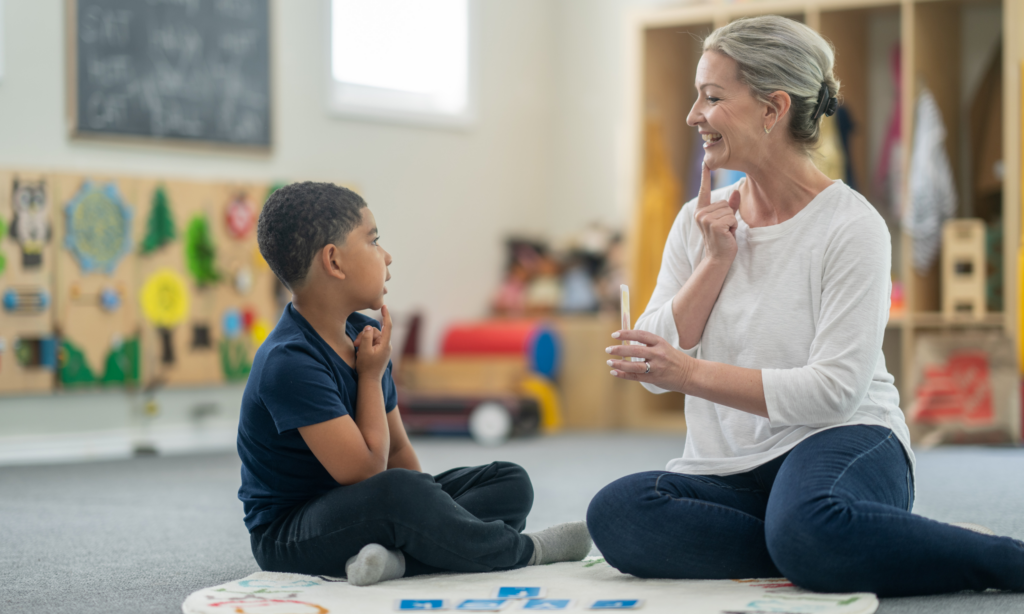
At therapy Clubhouse, our language therapy for children in Ventura County helps strengthen the communication skills they rely on to share ideas, build relationships, and comfortably participate in the world around them. If you’ve noticed your child struggling to express themselves, follow directions, understand questions, or stay engaged in conversation, extra support can make these areas feel more approachable. At Therapy Clubhouse, language therapy is shaped around genuine connection and your child’s natural curiosity rather than expectations or unnecessary pressure. We focus on helping your child explore words, concepts, and interactions in ways they understand in a comforting environment so communication can unfold at a pace that fits who they are.
If you’re searching for advice or guidance on how to support your child’s communication growth, our team is here to listen and help you understand what may benefit them. We take the time to observe how your child communicates, responds, and engages, building a therapy plan that meets them where they are at and encourages them. You are welcome to reach out to Therapy Clubhouse at (805) 624-3301 to learn more about our in-home and in-clinic language therapy services and how our team can support you. Together, we can help your child feel heard, confident, and excited to explore new ways of expressing themselves.
Language therapy for children in Ventura County supports those who need help expressing themselves, understanding others, or participating in meaningful communication throughout their day. Some children use words but struggle to form sentences or organize their thoughts, while others speak very little and rely on gestures or sounds to communicate. You might notice your child becoming frustrated when others cannot understand what they’re trying to say, or you may observe that following directions, answering questions, or engaging in conversation feels difficult for them. These moments are indicators that extra language support could help your child feel more confident and understood.
Language development is not the same for every child, and some kids simply need more time or guidance as these skills emerge. Therapy Clubhouse provides a warm, gentle environment where children can explore communication at their own pace with support that feels encouraging rather than overwhelming. Understanding the signs that your child may benefit from language therapy can help you make informed decisions about their developmental needs and how to support their communication growth moving forward.
Expressive language refers to a child’s ability to communicate thoughts, needs, and ideas. Children with expressive language differences may speak less than expected for their age, use shorter sentences, or find it difficult to retrieve words during conversation. Sometimes expressive language challenges are subtle, appearing during daily routines or moments when your child wants to share something but cannot quite form the words they need.
Some children understand far more than they can express. You might notice that your child uses only a few words, repeats familiar phrases, or struggles to combine words into sentences. These signs often indicate that your child needs support strengthening expressive language skills. At Therapy Clubhouse, language therapists use play, routines, and interactive activities to help children build vocabulary, sentence structure, and confidence communicating their ideas.
Children often feel overwhelmed when they cannot communicate their needs clearly. This frustration can appear as crying, pulling away, or giving up quickly during tasks that require expressive language. Therapy provides a supportive place for your child to practice communication in a way that feels manageable, helping them discover new ways to express themselves without fear or pressure.
Some children use the same words repeatedly or have difficulty learning and recalling new vocabulary. This may make interactions feel limited or repetitive. Therapy Clubhouse therapists help expand your child’s vocabulary through meaningful play and natural conversation, giving your child opportunities to discover new words in a way that connects with their interests.
Expressive language grows as children learn to share experiences, describe events, and tell simple stories. If your child struggles to explain what happened at school, describe what they want, or answer open-ended questions, language therapy may help them organize their thoughts more clearly. These skills grow gradually with support and play-based practice.
Receptive language refers to the ability to understand others’ words, directions, and questions. Some children hear language clearly but have difficulty processing what is being said. Others need more support following multi-step directions, interpreting questions, or understanding new vocabulary. Recognizing receptive language challenges early can help ensure your child receives guidance that supports their comprehension skills.
Children who benefit from receptive language support may struggle with directions that other children their age can follow. You might notice that your child pauses, looks confused, or begins a task incorrectly because they did not fully understand what was asked. These challenges do not reflect a lack of listening. They simply show that your child needs more support breaking down and processing language.
Simple requests such as “get your shoes” or “put your toy in the bin” may be difficult for children with receptive language needs. Therapy helps your child understand new vocabulary and sentence structures in a way that supports a stronger grasp of language used throughout their routines.
Some children may not respond consistently to questions, especially those that require them to think about concepts, recall events, or make choices. They may avoid answering altogether or give unrelated responses because they do not fully understand what is being asked. Language therapy helps children learn to interpret question types and practice meaningful responses during interactions that feel playful and supportive.
Understanding basic concepts such as sizes, locations, colors, or object categories plays a role in language comprehension. Children who find these ideas confusing may have difficulty participating in classroom routines, play activities, or simple daily tasks. Therapy Clubhouse therapists help strengthen these foundational comprehension skills through hands-on activities and natural learning opportunities.
Some children understand and use words but need more support in the social aspects of communication. Pragmatic language refers to the ability to use language appropriately in different situations, including conversation skills, turn-taking, and interpreting social cues. These skills affect how children participate with peers, communicate with adults, and express their needs in group settings.
Some children speak clearly but have trouble maintaining a conversation. They may repeat unrelated phrases, jump quickly from topic to topic, or respond without fully acknowledging what the other person has said. This makes interaction feel disconnected or confusing. Language therapy helps children learn how to stay engaged in conversations in ways that feel natural to them.
Social cues such as body language, tone of voice, and facial expressions can be difficult for some children to interpret. Therapists help build awareness of these cues gently, using play and guided interaction to help your child understand how communication works in different contexts.
Play offers many opportunities for language development. Children who struggle to use language during play may have difficulty with pretend play, taking turns, or communicating their ideas to peers. Therapy Clubhouse supports these skills by creating playful scenarios that encourage communication, social interaction, and flexible thinking.
Communication is deeply tied to connection. Some children prefer solitary play, appear unsure how to join group activities, or have difficulty expressing interest in others. These moments can indicate your child needs more practice in the social use of language. Language therapy helps children build confidence as they explore interaction at their own pace.
Our language therapy for children in Ventura County can take place in different environments depending on what helps your child feel most comfortable and supported. Some children thrive in Clinic settings where sensory tools, structured play areas, and motivating materials make communication feel exciting. Others feel more confident practicing language skills at home, where routines are familiar and communication occurs naturally throughout the day. Therapy Clubhouse offers both options so your child can learn in a space that reflects their needs, preferences, and developmental readiness. Choosing between in-home and in-clinic language therapy depends on what helps your child feel secure enough to explore new sounds, words, and communication patterns without overwhelm.
Each environment creates its own opportunities for meaningful growth. In-home sessions allow therapists to support communication where challenges and successes naturally occur, helping families integrate strategies into real life. In-clinic sessions invite children into play-based experiences designed to strengthen language skills through sensory exploration, shared interaction, and guided practice. Both options are rooted in the same gentle, child-led philosophy that makes Therapy Clubhouse a supportive place for early communication development.
The Therapy Clubhouse clinic provides a warm, sensory-rich environment where language development feels playful and engaging. Children who benefit from exploring new materials, practicing language during imaginative play, or participating in structured communication routines often respond well to clinic-based sessions. The clinic offers spaces that help children stay regulated while practicing expressive and receptive language skills in creative, interactive ways.
Clinic sessions allow therapists to use toys, visuals, movement activities, and pretend play tools that help children practice vocabulary, sentence-building, comprehension, and conversational skills. These materials are chosen intentionally to match your child’s interests so communication practice feels exciting rather than difficult. The structure helps guide your child toward specific goals, yet the flexibility keeps sessions responsive to your child’s needs.
Some children express themselves more easily during movement, tactile play, or sensory exploration. The clinic environment provides opportunities to incorporate these preferences into language practice, helping children stay regulated and focused while learning.
Many children benefit from practicing communication around others. The clinic provides moments where children can observe peers, practice turn-taking, and engage in shared play with therapist support. These interactions help build pragmatic language skills such as initiating conversation, responding to others, and using language during cooperative activities.
Clinic sessions follow a gentle rhythm so children know what to expect without feeling pressured. Predictable routines help children build confidence in their communication attempts, especially when they’re working on new or challenging skills. This consistency supports emotional comfort and increases a child’s willingness to participate in language-building activities.
In-home language therapy brings communication support directly into your child’s familiar environment. Children often communicate differently at home, where they feel deeply comfortable and naturally engage in daily routines. This makes in-home therapy especially valuable for supporting functional communication, helping children practice language skills during moments that occur throughout their day.
Routines like mealtime, dressing, playtime, and bedtime offer meaningful opportunities for communication. Therapists observe how your child expresses themselves during these moments and integrate strategies that strengthen language skills where they matter most. This approach helps your child use new vocabulary, follow directions, and participate in everyday interactions more comfortably.
Some children speak more at home than in clinic settings because the environment feels more predictable and calming. In-home therapy respects this comfort and uses it as a foundation for practicing expressive and receptive language skills.
In-home language therapy also supports families by helping caregivers understand how to encourage communication throughout the day. Therapists demonstrate strategies, explain developmental patterns, and guide interactions in ways that feel natural rather than scripted. This shared experience helps families feel empowered to support language development long after the session ends.
Because the home environment reflects your child’s everyday life, therapy often focuses on practical language skills such as requesting help, labeling objects, responding to questions, and following directions. These skills become easier to practice in a familiar space where your child already feels connected to the people and routines around them.
Every child responds differently to various learning environments, and choosing between in-home and in-clinic language therapy depends on what helps your child feel comfortable, regulated, and motivated. The right setting is not about which option is “better,” but which one allows your child to participate with confidence and ease. Therapy Clubhouse helps families consider their child’s sensory needs, emotional patterns, communication style, and readiness before making a recommendation.
Children who become overwhelmed by new environments may need the predictability of home to fully participate in sessions. Others feel energized and inspired by the clinic setting, where new toys and imaginative tools can spark communication. Understanding how your child processes sensory input helps determine which environment supports their engagement.
Some children begin in-home sessions and later transition to the clinic as their confidence grows. This blended approach helps children feel supported through changes while still gaining exposure to new experiences.
Certain language goals may be easier to practice in one setting over the other. For example, social communication and pretend play often flourish in clinic sessions, while functional communication during routines often develops best at home. Matching the setting to your child’s goals helps therapy feel purposeful and accessible.
Children grow quickly, and their needs may shift over time. A child who once needed home-based sessions may later benefit from clinic experiences, and the reverse can also be true. Therapy Clubhouse remains flexible and responsive, adjusting recommendations as your child develops new skills or encounters new challenges.
Each child brings their own preferences, sensitivities, and communication style into therapy. By choosing an environment that feels emotionally safe and developmentally appropriate, you give your child the foundation they need to explore language in a way that feels comfortable and meaningful.
Language therapy for children in Ventura County at Therapy Clubhouse is shaped around connection, play, and a deep understanding of how children naturally learn to communicate. Instead of relying on rigid drills or overly structured tasks, our therapists build language skills through engagement, curiosity, and meaningful interaction. Every child communicates differently, so each session is adapted to your child’s pace, interests, and emotional needs. This approach helps children feel comfortable enough to try new words, practice early sentences, or explore more complex communication without fear of being rushed or corrected harshly.
Our therapists make every session feel like a shared experience rather than an instructional lesson. Children become more willing to communicate when they feel understood, supported, and encouraged to express themselves in ways that feel natural. Therapy Clubhouse embraces this philosophy through child-led play, responsive teaching, and positive, nurturing interactions. These experiences help children strengthen expressive and receptive language, build conversational confidence, and develop communication skills that support their growth at home, in school, and during everyday interactions.
Play is a powerful foundation for communication, especially for young children. Through play, children discover new vocabulary, explore cause-and-effect relationships, practice social interaction, and use language in meaningful ways. Therapy Clubhouse uses play-based methods because play reduces pressure, keeps children engaged, and offers countless opportunities to learn naturally.
Children learn new communication skills most effectively during moments of shared joy and connection. Our therapists join your child in play by following their lead, expanding on their ideas, and modeling language in ways that match the flow of the interaction. These shared moments help children practice vocabulary, sentence structure, conversational turns, and social communication skills without feeling overwhelmed.
Some children struggle to stay engaged or become overstimulated during play. Therapists gently adjust activities to help your child stay comfortable and connected. This may include simplifying language, slowing down the interaction, or offering calming sensory tools that help your child participate more fully.
Toys, pretend play materials, books, and sensory objects provide natural opportunities for your child to learn new words. Therapists introduce vocabulary within meaningful play scenarios, helping children understand how words connect to actions, feelings, and ideas. This creates a strong foundation for expressive and receptive language.
Play creates opportunities to practice skills like waiting, responding, making requests, and sharing ideas. Therapists guide these interactions with sensitivity, helping children develop social awareness and conversational skills in ways that feel enjoyable.
Every child receives a personalized approach to their language therapy for children in Ventura County, but there are certain strategies our therapists commonly use because they are effective, gentle, and developmentally supportive. These techniques help children build expressive language, receptive language, and social communication skills while feeling understood and encouraged.
Therapists model words, phrases, and sentences that mirror your child’s level of communication. This gives your child language input that feels accessible and encourages them to imitate or expand their own skills. Modeling does not demand a response; instead, it provides your child with examples they can use when they feel ready.
For children who are not yet using many words, therapists model early communication attempts such as pointing, gestures, sound play, or simple word approximations. These models help children explore new ways of expressing themselves without pressure.
When your child says a word or phrase, therapists gently “expand” it by adding a little more language. For example, if a child says “car,” the therapist might say “big car” or “the car is fast.” These expansions help children learn how to build longer, more meaningful expressions.
Communication temptations create playful situations where children feel motivated to communicate. This might involve offering a favorite toy but waiting for your child to request it, placing an object slightly out of reach, or creating a small surprise during play. These moments encourage communication in a way that feels natural and fun.
Children are more likely to communicate during activities they love. Therapists use your child’s favorite games, characters, or routines to keep them engaged while practicing expressive and receptive language skills.
Some children learn best with visual supports such as pictures, gestures, or simple schedules. These tools help your child understand directions, routines, and new vocabulary. Visual supports also give children a predictable structure that makes communication feel more manageable.
Therapy Clubhouse believes that children communicate best when they feel emotionally safe and connected. This philosophy guides every part of our language therapy approach, from the materials we choose to the pace of each session. Instead of pushing children toward specific goals, therapists follow their interests, observe their cues, and respond with language models and strategies that fit the moment.
Children communicate in many ways, including gestures, sounds, body language, or partial words. Our therapists recognize the meaning behind these attempts and respond with supportive language that helps your child feel heard. This approach helps children trust the communication process and gradually expand their skills.
Familiar routines help children feel grounded. Therapists incorporate consistent patterns into sessions so children know what to expect. This predictability gives them space to try new communication skills while feeling emotionally supported.
Some children need time to process language before responding. Therapists offer wait time, gentle prompts, and soft encouragement that respects your child’s pace and communication style.
Therapy Clubhouse avoids strict correction or demanding responses. Instead, therapists celebrate attempts, build on successes, and encourage children with patience. This helps communication feel enjoyable rather than stressful and supports long-term language growth.
Language therapy is most effective when skills extend beyond the session. Therapists work with families to integrate communication strategies into routines, playtime, and natural interactions. This helps your child practice new skills throughout their day and strengthens communication at home.
Language therapy for children in Ventura County at Therapy Clubhouse is more than learning new words or practicing sentences. It is about helping your child feel capable, seen, and supported as they grow into a confident communicator. Our therapists take a holistic approach that considers your child’s emotional needs, sensory profile, interests, and developmental strengths. This creates a deeply personalized experience that helps children feel connected and motivated during every session.
Communication challenges often come with big feelings or sensory sensitivities. Therapists observe your child carefully to understand what helps them stay regulated during interaction. This sensitivity makes therapy feel safe and welcoming, allowing communication to unfold in a comfortable way.
Every new sound, gesture, or word is meaningful. Therapists make space to celebrate these moments so your child feels proud and encouraged. These successes build momentum and help children see themselves as capable communicators.
As children become more confident expressing themselves, they develop a stronger sense of who they are. This confidence influences their relationships, play, and participation in everyday routines. It also helps them approach new communication challenges with a sense of curiosity rather than hesitation, allowing growth to feel reassuring instead of overwhelming.
If you’ve been wondering how to support your child’s communication more or have noticed moments where language seems to come with a certain level of frustration, language therapy can be a great way to encourage your child. Therapy Clubhouse was created to be a safe place where children feel comfortable expressing themselves, especially during those moments where words don’t come easily. Our therapists use play, child-led sessions, and evidence-based methods to help your child build communication skills without feeling pressured or judged. Language learning is a wonderful aspect of a child’s early life, and we focus on creating an experience that reflects that so sessions never feel like a chore.
If you’re interested in learning more about our Ventura County language therapy services or have questions about how to support your child, we would love to hear from you. We take a gentle, personalized approach with every child, making sure sessions are shaped around their personality, comfort level, and developmental stage. To speak with our staff to learn more about how we can help you, call Therapy Clubhouse at (805) 624-3301 or reach out to us online. We would be honored to support your child as they grow their language and communication skills.