

Pragmatic language therapy supports children who need help understanding how conversations work, how to read social cues, and how to connect with others in natural ways. A child may speak clearly and have a strong vocabulary yet still find it hard to join play, keep up with group discussions, or understand things like tone, humor, or personal space. These social parts of communication can be confusing for some children, even if other language skills have developed smoothly. Pragmatic language therapy looks at how your child communicates in real situations so they can build tools that help everyday interactions feel less muddled and easier to navigate.
If you’re exploring options to support your child’s social communication, Therapy Clubhouse offers a gentle, structured approach that takes your child’s personality, interests, and developmental stage into account. Our therapists focus on helping children practice conversation, perspective-taking, and social problem solving in ways that feel engaging rather than clinical. We work to create a supportive environment where your child can explore new communication skills at a pace that aligns with their learning style and strengths. To learn more about our Ventura County pragmatic language therapy or to speak with our team, we encourage you to reach out to Therapy Clubhouse at (805) 624-3301. Together, we can begin building communication foundations that help your child feel more comfortable and capable in their day-to-day lives and interactions
Pragmatic language therapy in Ventura County focuses on how children use language in real-life social situations. While some children speak clearly and use age-appropriate vocabulary, they may still struggle to communicate effectively during conversations, play, or group activities. Pragmatic language skills help children understand how communication works beyond words alone, including how to take turns in conversation, stay on topic, interpret tone and body language, and adjust their language based on the situation. When these skills are still developing, everyday interactions can feel confusing or disconnected for a child.
At Therapy Clubhouse, pragmatic language therapy supports children in learning how communication functions within relationships, routines, and social experiences. Therapy looks at how your child engages with others, responds to social cues, and uses language to participate meaningfully in their environment. These skills influence friendships, classroom participation, and daily interactions, making pragmatic language an essential part of communication development.
Pragmatic language refers to the social rules that guide how language is used. These rules help children understand when to speak, what to say, how much information to share, and how to respond to others. Children who benefit from pragmatic language therapy often understand language literally but need more guidance using it flexibly and appropriately in social contexts.
Conversation is a shared experience that requires listening, responding, and adjusting based on what another person says or does. Some children talk at length without noticing when others want to speak, while others struggle to respond once it is their turn. Pragmatic language therapy in Ventura County supports children in recognizing conversational cues and practicing balanced exchanges that feel more natural during interactions.
Children may need explicit practice learning when to pause, how to wait, and how to re-enter a conversation appropriately. Therapy provides structured yet flexible opportunities to practice these skills through play, games, and guided discussion.
Staying on topic helps conversations flow smoothly. Some children shift topics abruptly or respond with information that does not match the conversation. Pragmatic language therapy helps children learn how to connect their responses to what others are saying, supporting clearer and more meaningful communication.
Communication includes facial expressions, body language, tone of voice, and proximity. Children who miss these cues may misunderstand social situations or respond in ways that feel unexpected to others. Therapy helps children practice noticing and interpreting these signals so interactions feel easier to navigate.
Pragmatic language therapy differs from traditional language therapy by focusing less on vocabulary or sentence structure and more on functional communication. Sessions are designed to reflect real-life situations where social language skills are required, such as playing with peers, participating in group activities, or navigating conversations with adults.
Children learn pragmatic skills more effectively when practice mirrors real interactions. Therapy sessions may include role-playing, cooperative games, storytelling, or problem-solving activities that require communication. These contexts allow children to apply skills in ways that feel relevant and engaging.
Play naturally encourages interaction, negotiation, and shared attention. Pragmatic language therapy uses play-based activities to help children practice requesting, responding, clarifying, and repairing communication breakdowns as they occur.
Children may communicate differently with peers than with adults or may struggle adjusting language in structured versus unstructured environments. Therapy helps children recognize how expectations shift depending on the setting and how to modify their communication accordingly.
Understanding that others have different thoughts, feelings, and intentions plays a role in social communication. Pragmatic language therapy supports children in recognizing perspectives outside their own, helping them interpret why someone might say or do something in a particular situation.
Pragmatic language therapy in Ventura County targets a wide range of social communication skills that support daily participation. These skills develop gradually and often require explicit teaching, modeling, and practice for children who find social language challenging.
Some children answer questions with unrelated information or struggle to provide enough detail. Therapy helps children learn how to interpret different question types and respond with relevant, organized information that matches the conversational context.
When communication breaks down, children may not know how to clarify their message or ask for help. Pragmatic language therapy teaches children strategies for rephrasing, asking follow-up questions, or checking for understanding.
Starting a conversation or joining ongoing play can be difficult for children who are unsure how to enter social situations. Therapy provides structured opportunities to practice greeting others, making comments, and entering group activities in appropriate ways.
Idioms, sarcasm, jokes, and indirect requests can be confusing for children who interpret language literally. Pragmatic language therapy helps children recognize when language is being used figuratively and explore what the speaker may mean beyond the words themselves.
Recognizing humor and subtle social meaning supports peer relationships. Therapy introduces these concepts gradually, allowing children to explore them in a supportive setting.
Pragmatic language skills also involve expressing emotions in socially appropriate ways. Children learn how to describe feelings, respond to others’ emotions, and adjust their language based on emotional context.
At Therapy Clubhouse, pragmatic language therapy is individualized to reflect how each child communicates and interacts. Therapists observe how your child participates in conversations, play, and routines to understand where support may help. Sessions are structured to feel engaging and purposeful, allowing children to practice skills in ways that align with their interests and developmental level.
Children are more likely to practice social communication when activities feel motivating. Therapists follow the child’s interests, using preferred topics and activities to encourage interaction and participation.
Therapists model appropriate social language during interactions, offering examples children can imitate and build upon. Guided practice helps children apply new skills while receiving immediate feedback and support.
Pragmatic language skills develop through repeated exposure and practice. Therapy progresses at a pace that allows children to build confidence as they refine their communication abilities. New expectations are introduced thoughtfully so children have time to apply each skill in familiar interactions before moving on to more complex social situations.
Therapy Clubhouse emphasizes helping children carry pragmatic language skills into everyday situations. Practicing across different activities supports generalization and helps communication feel more natural outside of therapy sessions.
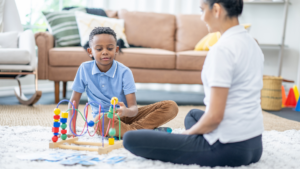
Pragmatic language therapy in Ventura County supports children who have difficulty using language in social, interactive ways. Some children speak clearly and use a wide range of vocabulary, yet still struggle during conversations, play, or group activities. You may notice that your child has trouble joining interactions, responding appropriately to others, or understanding unspoken social expectations. These patterns can make daily communication feel confusing for your child, especially as social demands increase in school and community settings.
Social communication abilities develop gradually and often need direct support when a child is having a hard time figuring out how language works between people. Pragmatic language therapy helps identify where your child may need extra guidance so communication can feel more predictable and easier to manage. Recognizing these differences early gives your child more time to practice skills that encourage smoother participation in social situations.
Conversation involves much more than finding the right words. Children learn how to listen, take turns, adjust their tone, and respond in ways that keep interactions moving. When these skills are still developing, conversations can feel one-sided, off-topic, or difficult for your child to maintain over time.
Some children speak at length without noticing when another person wants to talk, while others respond with very short answers or remain quiet when it is their turn. You might find that conversations feel unbalanced or that your child either dominates the interaction or withdraws from it altogether. Noticing these patterns helps highlight where additional support could make conversations feel more manageable for your child.
Children may need explicit practice learning when to wait, when to respond, and how to recognize natural pauses in conversation. Practicing these skills in structured, low-pressure activities gives your child space to explore conversational timing without feeling rushed.
Some children jump from idea to idea without noticing how quickly the topic has changed. Others respond with information that does not relate closely to what was said. When this happens frequently, peers may find it harder to follow the conversation. Helping children notice topic changes and connect their responses more closely to what they hear creates a clearer path for shared understanding.
A child may offer too much detail, skip important information, or use language that does not match the listener’s age or familiarity with the topic. These difficulties often show up during storytelling, explaining events, or giving directions. Learning how to consider what the listener already knows or needs to know gives your child more tools to communicate effectively in different situations.
Social communication relies heavily on cues that are not spoken out loud. Facial expressions, eye contact, body posture, gestures, and tone all affect how messages are understood. When children have difficulty recognizing or interpreting these cues, they may misread situations or react in ways that others do not expect.
A child might continue talking about a favorite topic even when someone appears distracted, upset, or ready to move on. They may not notice when a peer steps back, turns away, or looks confused. Becoming more aware of body language and facial expressions gives children more information to guide how they respond in the moment.
The same sentence can sound playful, annoyed, or serious depending on tone. Children who miss these differences may misinterpret jokes as criticism, or may not realize when someone is speaking gently versus firmly. Practicing how tone changes meaning helps your child better understand the emotional layer of conversations.
Some children stand very close, touch others unexpectedly, or interrupt often without realizing the impact of these behaviors. Others may stay far away or avoid eye contact, making it harder for peers to invite them into play. Learning how to read and respect personal space and boundaries supports more comfortable interaction for everyone involved.
Phrases like “hold your horses,” “break a leg,” or “give me a minute” can feel confusing when taken literally. Jokes, sarcasm, teasing, and hints also require children to look beyond the exact words. When a child takes everything at face value, peer interactions may feel puzzling or frustrating. Gradually exploring these forms of language helps your child make more sense of the conversations happening around them.
Pragmatic language skills are closely tied to how children build and maintain peer relationships. Social communication differences often become more noticeable during unstructured times like recess, group projects, or cooperative games, when there are fewer clear rules about how to interact.
A child may hover near a group without knowing how to join, or may jump into play in a way that feels confusing to other children. Sometimes they introduce themselves in the middle of the activity or change the rules abruptly, which can cause peers to pull away. Learning simple, predictable ways to enter play or conversation makes it easier for your child to participate.
Play often involves negotiating roles, resolving disagreements, and making group decisions. Children who struggle with these parts of interaction may be labeled as “bossy,” “rigid,” or “uncooperative,” when in reality they are unsure how to communicate their ideas while considering others. Practicing negotiation language and shared decision-making in a guided setting gives them more options during real play.
Children who have difficulty imagining how a situation looks from another person’s point of view may interrupt, correct others frequently, or insist on their own interpretation. This can affect how peers respond to them over time. Gently exploring different viewpoints through stories, role-play, and discussion helps children understand that people can see the same situation in different ways.
A child may speak to a teacher the same way they speak to a sibling, or may use a very formal tone in casual settings. Others may behave appropriately at home but struggle with the faster pace and complexity of classroom and playground interactions. Understanding that different environments have different communication expectations gives children a clearer framework for how to engage.
Some children do well in highly structured conversations but lose their footing in spontaneous, fast-moving exchanges. Others manage informal play better than organized discussions. Practicing pragmatic skills in both structured tasks and open-ended activities helps children carry what they learn into the variety of situations they encounter each day.
Therapy Clubhouse looks closely at how your child uses language with others, rather than focusing only on how they speak in isolated tasks. Understanding how your child communicates during natural interactions helps clarify which pragmatic skills are emerging and which need more guidance.
Children may communicate differently during one-on-one conversation, small group play, and larger classroom-like activities. Watching how they respond in each setting reveals patterns that might not appear in a single environment. These observations inform which skills to target first and how to structure support.
Every child brings unique strengths to social communication, whether it is enthusiasm, creativity, humor, or strong knowledge in specific topics. Building on existing strengths makes it easier to introduce new skills and helps children feel more capable as they practice.
Pragmatic language abilities grow through repetition, modeling, and real experiences. Focusing on steady, manageable steps allows children to integrate new skills into how they already communicate, rather than feeling like they must change everything at once.
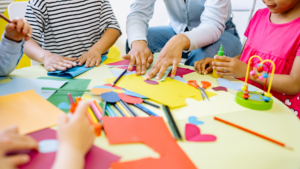
Pragmatic language therapy in Ventura County focuses on helping children communicate more effectively in the social situations they experience every day. Instead of using a single, standardized goal plan for every child, Therapy Clubhouse builds goals that reflect how your child currently communicates, where they feel unsure, and what kinds of interactions they encounter most often. Some children need support with basic turn-taking and joining play, while others work on more nuanced skills like understanding humor, interpreting indirect language, or navigating group conversations. Each child’s goals are shaped to match their developmental stage, strengths, and current social demands.
Progress in pragmatic language is not measured by one checklist or milestone. It shows up in small, meaningful shifts, such as a child waiting for a turn to speak, noticing when a peer wants to share, or using language to solve a problem instead of walking away. Therapy Clubhouse aims to build these skills in gradual steps so children can carry them into friendships, classroom settings, and family interactions with growing comfort over time.
Pragmatic language therapy outcomes often center on how comfortably a child can participate in conversations, play, and shared activities. Functional social communication skills help children share ideas, receive information, and stay connected in interactions that matter to them. Therapy Clubhouse uses play, discussion, and real-life scenarios to help children develop skills they can use across home, school, and community settings.
For some children, a primary goal involves participating in everyday conversations without feeling lost or disconnected. Goals may focus on skills like starting a conversation appropriately, staying on topic long enough for mutual understanding, or asking follow-up questions to show interest. Children practice these skills in structured activities first, then gradually use them in more natural interactions.
Over time, conversation goals may shift from basic turn-taking to more subtle skills, such as noticing when someone is confused and offering clarification. Pragmatic language therapy in Ventura County supports this shift by introducing new challenges as a child becomes more confident and comfortable during interaction.
When children learn how to organize their thoughts and share them in a way others can follow, communication tends to feel less frustrating. Therapy activities may involve storytelling, explaining steps in a game, or describing an event from their day, helping children practice structuring information in a way that makes sense to listeners.
Group settings place unique demands on social communication. Children must follow directions, wait for their turn to contribute, and respond to multiple people at once. Goals in this area may involve raising a hand instead of calling out, listening to peers’ ideas, or participating in small group tasks more consistently. Practice in therapy might include mock classroom discussions, collaborative games, or role-play that mirrors group routines.
Expanding Participation in Classroom and Group Settings
As children become more comfortable speaking in groups, goals may expand to include contributing ideas during projects, responding constructively to suggestions, or negotiating roles in group activities. These skills help them feel more capable of participating in classroom learning and other group experiences.
Some children shut down when others do not understand them, or they repeat themselves without adjusting how they are speaking. Goals can involve recognizing when a communication breakdown has occurred and choosing strategies to repair it, such as rephrasing, slowing down, or adding more detail. These tools give children a way to keep the interaction going rather than withdrawing.
Ventura County pragmatic language therapy at Therapy Clubhouse prioritizes the development of goals that reflect each child’s age, environment, and communication profile. A preschooler learning how to share toys and invite others to play will need very different goals from a school-aged child who struggles with group projects or subtle social rules. Individual goals are created through observation, discussion with caregivers, and careful consideration of where support can make the biggest difference in daily life.
For younger children, pragmatic language goals often center around play, basic interaction, and early social routines. Targets may include skills like making eye contact during shared play, taking turns with a toy, responding to a peer’s simple request, or using language to initiate play instead of relying only on actions. Sessions may incorporate pretend play, simple games, and routines that encourage shared attention and cooperative interaction.
As younger children progress, goals may grow to include using language to negotiate (“my turn next”), refusing appropriately, or inviting others into play. Practicing these skills in a playful, supportive environment helps them become more natural in real-life peer interactions.
Play-based goals often include helping children adjust their communication as play changes. For example, a child might work on shifting from parallel play to more interactive play by gradually increasing how often they respond to another child’s comments or actions. This kind of flexibility supports richer play experiences and more collaborative interactions.
School-aged children often need goals that reflect more complex social expectations. These may involve understanding classroom norms, managing group work, interpreting nonliteral language, or handling disagreements with peers. Goals can include recognizing when a peer wants a turn to speak, staying with a topic long enough to build connection, or using language to compromise during shared activities.
For older children, goals might also focus on perspective-taking, such as considering how a comment might sound to someone else, or thinking about how their actions affect a group. These skills are helpful for building and maintaining friendships and navigating the social aspects of school.
Children’s needs change as they move into new grades, join extracurricular activities, or encounter more complex social groups. Therapy Clubhouse revisits and updates goals regularly to reflect these changes. A child who initially worked on greeting peers might later target group conversation skills or leadership in cooperative tasks. Keeping goals aligned with current demands helps therapy remain meaningful and relevant.
Some children show growth in small, steady increments, such as joining a conversation for a bit longer each week. Others may demonstrate sudden leaps after building foundational skills over time. The pace and visible shape of progress vary, and goals are adjusted based on how each child responds to practice and support.
Beyond individual skills, pragmatic language therapy aims to help children develop a deeper sense of how communication works across different situations. Long-term goals often involve helping children adapt their communication style depending on who they are talking to, what is happening around them, and how others respond. Therapy Clubhouse designs goals with this broader growth in mind so children can continue using their skills as environments and expectations shift.
Social misunderstandings are a natural part of development, but children with pragmatic language needs may encounter them more frequently. Goals in this area focus on helping children recognize when a situation is becoming confusing or tense and use language to ask questions, clarify, or step back in a respectful way. Practicing these skills in therapy gives children a safer starting point for handling similar moments with peers or adults.
Children may also work on managing differences in opinion using language that remains respectful and clear. Learning how to express disagreement without escalating conflict supports more stable relationships with classmates and friends.
A key outcome of pragmatic language therapy involves generalizing new skills into everyday life. Therapy Clubhouse works with families to identify routines where social communication skills can be practiced, such as family meals, game nights, community activities, or schoolwork. When children use skills outside the therapy room, the gains they make tend to feel more meaningful and lasting.
Caregivers may receive simple strategies for prompting or supporting skills at home without turning every interaction into a lesson. These strategies often involve natural reminders, modeling, or opportunities for the child to try out new language in real situations.
As children grow more comfortable with pragmatic language skills, they often require fewer prompts to navigate social moments. Long-term goals may include using strategies independently, such as noticing when someone looks confused and offering more information, or choosing appropriate ways to join group activities. Developing this independence helps children feel more capable in a wider range of social settings.
Pragmatic language therapy is not static. Goals are revisited as children develop new interests, face new social expectations, or move into different learning environments. Adjusting goals across time allows therapy to remain aligned with the child’s real-world experiences and keeps communication support closely connected to what they encounter each day.
If you’ve noticed your child struggling to join conversations, connect with their friends, or interpret social cues, pragmatic language therapy can offer focused support to help them engage and interact with others. Our therapists design sessions around your child by using play, role-play, and guided conversations to help them learn how language works between people. Therapy Clubhouse was created to be a space where children can practice real-world communication skills in an encouraging and comforting environment without feeling rushed or overly clinical. The goal is not to change part of your child, but to make social communication more digestible and approachable so they can interact with others without feeling misunderstood.
If you’re interested in exploring our pragmatic language therapy services, our team is here to answer your questions and create a plan that aligns with your child. We take the time to understand your child’s strengths, challenges, and daily environments and what kind of goals to work towards. To connect with our team or schedule a time to talk about how we can support you, call (805) 624-3301 or reach out to us online. We would be honored to partner with you and support your child as they build stronger social communication skills and gain confidence interacting with the world around them.