
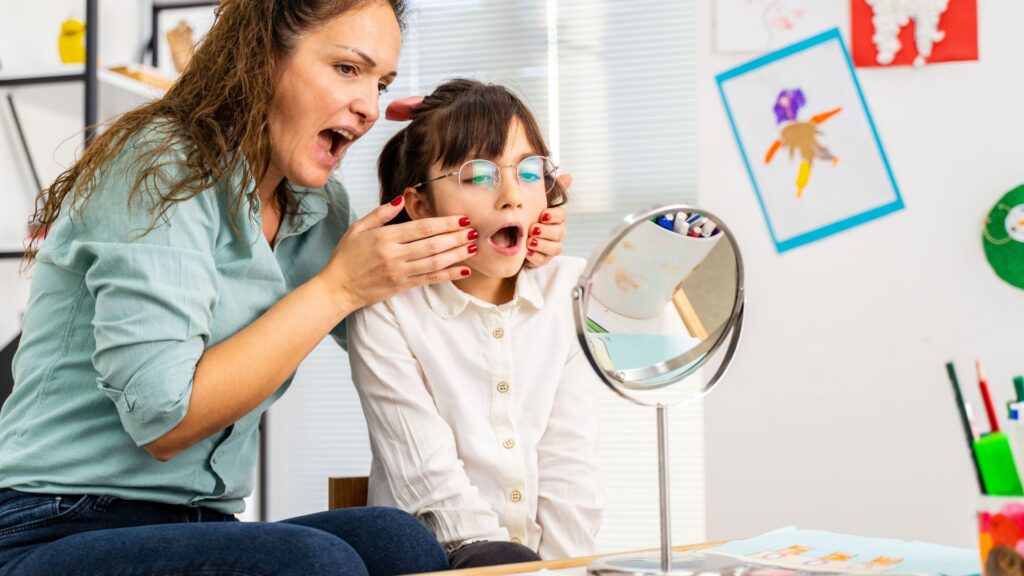
Sound Production Therapy for children helps kids strengthen the clarity of their speech in a way that feels playful and supportive. At Therapy Clubhouse in Ventura County, we understand how frustrating it can feel when a child knows what they want to say but the sounds do not come out the way they intend. When kids feel understood and encouraged, they begin taking the small steps that lead to clearer and more confident speech.
We built an environment where kids can practice at their own pace while feeling safe, seen, and excited to try. Our therapists use movement and meaningful interaction to help children build sound awareness and strengthen the motor skills needed for speech. Parents are supported every step of the way so progress continues at home through moments of connection rather than correction. If you are ready to explore how Sound Production Therapy can support your child’s communication growth, we would love to help. You can reach us at (805)624-3301 or visit our contact page to begin a conversation that feels hopeful and centered on your child’s voice.

Speech clarity grows from a child’s ability to notice sounds, feel how their mouth moves, and practice those movements in playful ways. Sound Production Therapy for children helps kids strengthen these skills at a pace that feels safe and encouraging so they begin to express themselves with greater confidence. When kids understand how a sound feels and how it fits into a word, speech becomes easier and communication becomes more satisfying. Therapy Clubhouse uses play, movement, and connection to help kids discover new sounds through experiences that feel joyful rather than pressured. As clarity improves, kids begin to participate more openly in conversations and feel proud of what they can say.
Parents often share that their child seems frustrated when they cannot make certain sounds or when others have trouble understanding them. Our goal is to help kids move past that frustration by giving them tools that support clear speech and emotional confidence. When therapy focuses on connection and curiosity, kids approach learning with comfort instead of worry. Over time, these small moments of success help children believe in their ability to communicate and strengthen their desire to share ideas with the people around them. Progress becomes something kids feel excited about rather than something they feel nervous to attempt.
Sound awareness helps children notice the differences between speech sounds and understand how their mouth moves to create each one. Some kids need extra support to identify the small variations between sounds, while others benefit from playful listening activities that highlight patterns. When kids learn how sounds are shaped, they begin to use them with greater accuracy. This awareness becomes the foundation for clearer speech and helps children feel more confident when they attempt new words. Through gentle practice, sound awareness becomes a natural part of how children communicate.
Listening helps kids hear the subtle differences between sounds and recognize when a word changes because of a single sound. This kind of attention builds early sound discrimination and supports more accurate speech attempts. With repeated listening in playful contexts, kids begin to internalize how sounds fit together.
Listening gives kids a roadmap for using new sounds. As they learn to match what they hear with what they say, clarity improves.
Awareness helps kids understand how sounds flow within a word. When therapy highlights these patterns through games and movement, kids begin using sounds more intentionally. This awareness helps children feel more prepared to try challenging words.
When kids understand how a sound works, they feel more comfortable trying it. This comfort leads to more consistent participation.
Every speech sound requires a specific combination of movements from the tongue, lips, jaw, and breath. Some kids need extra support to coordinate these movements in a way that feels smooth and natural. Therapy Clubhouse uses playful motor practice to help kids feel where a sound happens in their mouth and how to move between positions. These activities help kids strengthen the motor planning skills that support clear and confident speech. As movement becomes more familiar, kids begin using sounds more consistently and with less frustration.
Playful activities help kids notice the movements their mouth makes when forming sounds. These moments allow them to explore new positions without pressure and learn through curiosity. As they become more comfortable with these movements, coordination improves.
Better coordination helps kids produce sounds more accurately. This accuracy leads to greater overall clarity in daily communication.
Consistent practice helps kids build strong habits that make speech feel easier over time. When routines are playful and predictable, kids stay engaged and make steady progress. This consistency helps children feel more capable during conversations.
Practice helps kids feel prepared for new speech challenges. As they master movements, their confidence grows.
Confidence grows when kids experience success in small, manageable steps. Sound Production Therapy helps children approach new sounds in a way that feels supportive so they can participate without fear of making mistakes. When kids feel emotionally safe, they are more willing to experiment with sounds, explore new combinations, and take risks in communication. These early successes help children feel proud of their abilities and strengthen their desire to share ideas. Confidence becomes a powerful motivator that supports ongoing speech development.
Emotional safety helps kids feel brave enough to explore sounds they have struggled with. When therapy feels warm and predictable, kids try new things without worrying about being wrong. This safe environment helps children begin to believe in their ability to communicate clearly.
Safety helps kids stay engaged in challenging moments. This steady engagement leads to consistent progress.
Small wins help kids feel proud of what they can do and encourage them to keep practicing. Each moment of success strengthens their internal belief that communication is achievable. These experiences help children approach new tasks with excitement rather than hesitation.
Confidence helps kids participate more actively in conversations at home and school. This participation reinforces their communication skills over time.
Play creates the perfect space for children to explore new sounds without pressure. Sound Production Therapy for children uses playful interaction to help kids practice speech movements in ways that feel natural and enjoyable. When children are engaged in activities that spark imagination and curiosity, they become more willing to experiment with sounds and use their voices in new ways. This approach helps children connect emotionally to the learning process and reduces the frustration they may feel when speech clarity is difficult. Over time, these playful moments become stepping stones to clearer and more confident communication.
Parents often share that their child responds differently when learning happens through play rather than structured drills. Play gives kids room to explore sound patterns at their own pace and helps them stay regulated even when the task is challenging. As kids move, laugh, pretend, and interact, they practice sound patterns in meaningful contexts that support lasting growth. This child-led approach helps kids feel capable and encourages them to take small risks that lead to progress. When learning feels joyful, kids become more enthusiastic participants in their own communication journey.
Playful interaction helps children discover new sounds in ways that feel exciting rather than intimidating. When learning is embedded within play, kids naturally experiment with speech because they are focused on the story, game, or activity in front of them. This shifts the focus from performance to engagement and helps children explore sound patterns without fear of making mistakes. As kids participate in playful moments, they begin to connect sounds to actions, emotions, and ideas, which strengthens their understanding of how speech works. Play becomes the bridge that helps children feel more comfortable using new sounds during real communication.
Games offer opportunities for kids to practice sounds while staying immersed in an activity that captures their interest. These moments help children focus on expression rather than perfection, which makes speech learning feel more empowering. Through repetition and movement, games support steady sound development.
Game-based practice helps kids realize that speech is part of meaningful interaction. This confidence allows them to use new sounds with more consistency.
Pretend play encourages children to create characters, stories, and sound effects that naturally increase speech attempts. Each playful scenario becomes a chance to use different sounds in expressive and imaginative ways. This creative freedom helps kids feel more in control of their communication.
Pretend play helps kids express ideas with emotion and enthusiasm. This expressive practice strengthens their connection to speech as a joyful tool.
Movement helps children stay engaged while also supporting the physical coordination needed for clear speech. Many kids learn best when they can jump, stomp, stretch, or move their body as part of the activity. This movement supports motor planning and helps children coordinate the lip, tongue, and jaw movements required for accurate sounds. When therapy blends movement with sound practice, kids stay regulated and enjoy the process, which increases the number of meaningful sound attempts. This combination of sensory input and motor learning creates steady progress that feels both accessible and fun.
Movement activities help children strengthen the coordination needed for speech by engaging both the body and the voice. These experiences help kids feel how sound production connects to breath, posture, and control. Over time, movement improves the consistency of sound accuracy.
Improved coordination helps kids approach new sounds with more stability. This readiness supports clearer and more confident speech practice.
Movement helps children stay curious and prevents them from feeling overwhelmed during challenging moments. As kids stay active, they become more willing to repeat sounds and practice patterns. This motivation supports steady, child-led learning.
Motivated children practice more often and with more enthusiasm. This consistent practice builds strong long-term speech skills.
Emotional safety is one of the most important parts of speech learning. Kids learn best when they feel understood, supported, and free to try without fear. Play creates this emotional safety by meeting children where they are and allowing them to engage in ways that feel comfortable. When therapy feels warm and predictable, kids become more open to experimenting with sounds they might normally avoid. This sense of safety turns speech practice from something stressful into something encouraging and inviting.
Supportive play offers children opportunities to try new sounds with gentle encouragement. These moments help kids replace worry with curiosity and bravery. When children feel seen, they approach speech tasks with more confidence.
Trying new sounds helps kids break through communication barriers. Each attempt supports the development of clearer speech patterns.
Warm interactions help kids relax into the learning process and trust the guidance offered by their therapist. This comfort encourages more consistent participation and greater willingness to try challenging sounds. As kids feel more secure, they begin to approach speech learning with openness and pride.
Confidence helps kids stay engaged in communication. This engagement promotes lasting growth in speech clarity.
Repetition is essential for learning new speech sounds, but repetition feels much easier when it happens inside play. Through familiar games, routines, and playful interactions, kids practice the same sound patterns many times without feeling bored or pressured. These repeated experiences help build strong neural pathways that support clear sound production. When repetition is tied to joy and connection, kids internalize the skills more quickly and are more willing to continue practicing at home.
Familiar routines help children predict what comes next, which supports calm and focused participation. As kids repeat actions and sounds within these routines, their accuracy improves. This predictable structure makes learning feel safe and manageable.
Mastery gives kids confidence to try more complex sounds. This confidence strengthens overall communication skills.
Playful repetition helps kids build strong memories for how sounds are formed. As children repeat patterns in fun contexts, their accuracy becomes more consistent. This helps them apply new sounds in daily communication.
Stronger memory helps kids carry new skills into conversations. This improvement supports clear and confident communication across settings.

Families choose Therapy Clubhouse because they want a place where their child feels understood, supported, and encouraged throughout the speech learning process. Sound production can feel overwhelming for kids when sounds do not come out the way they hope, and families often look for reassurance that progress can happen in a calm and meaningful way. Our approach to Sound Production Therapy for children reflects this need by creating a warm space where kids explore sounds through play, connection, and gentle guidance. Families appreciate that therapy focuses not only on clarity but also on confidence, emotional comfort, and the joy of being heard. As children feel safer expressing themselves, speech becomes a more natural and enjoyable part of their daily life.
Therapy Clubhouse is built on the belief that kids learn best when they feel safe and valued. Parents often share how comforting it feels to know their child is supported by a team that celebrates small steps and understands the emotional side of communication growth. Our therapists guide families with clarity and kindness so parents know exactly how to support their child at home. This shared approach helps progress feel steady and reassuring rather than stressful. Over time, families begin to see communication become stronger and more joyful as kids discover how capable they truly are.
The environment at Therapy Clubhouse is designed to help kids relax into the learning process. Children need emotional and sensory comfort before they can practice challenging sounds, and our space supports this through calming lighting, comfortable seating, and inviting play materials. When kids feel relaxed, they are more likely to explore new speech patterns and attempt sounds that felt difficult before. The environment communicates that learning happens through connection and curiosity, not pressure. As comfort grows, so does a child’s willingness to participate.
A calm environment reduces sensory overwhelm and helps children stay grounded. When kids can focus without distractions, they engage more meaningfully in speech practice. This calmness creates a foundation for clearer and more consistent sound attempts.
Calmness helps kids feel emotionally available for speech learning. This emotional readiness leads to more confident participation.
Playful materials such as pretend toys, movement props, and visual supports invite kids into moments of practice without formal expectations. These tools help children experiment with sounds while staying immersed in an activity they enjoy. Play makes practice feel meaningful and fun.
Play keeps kids excited about returning to therapy. This engagement reinforces the skills they are learning.
Therapists at Therapy Clubhouse approach sound learning with a blend of expertise and empathy. Kids need time to explore new movements, feel how sounds are formed, and practice patterns through repetition. Our therapists guide this process gently so kids feel encouraged rather than corrected, which helps them stay open to learning even when tasks feel challenging. Families choose Therapy Clubhouse because they trust that their child will be supported with patience and thoughtful care. As kids experience success in small steps, they begin to replace frustration with confidence.
Child led approaches help kids stay in control of their learning. When children choose activities that feel meaningful, they engage more deeply in sound practice. This sense of control reduces fear and supports emotional comfort.
Comfort helps kids attempt sounds more clearly because they feel safe enough to try. This sense of security leads to steady progress.
Therapists use clear and gentle modeling to show kids how sounds are formed. This approach helps children understand where their tongue, lips, and jaw should move without feeling overwhelmed. Modeling strengthens understanding and builds readiness for consistent practice.
Modeling helps kids form strong mental pictures of how to produce sounds. These internal references become tools they use in daily communication.
Families choose Therapy Clubhouse because they want to understand how to help their child feel confident communicating at home. Parents receive guidance that is warm, practical, and easy to implement, which helps them reinforce new skills during daily routines. When parents feel involved and supported, progress becomes stronger and more sustainable. This partnership turns therapy into a shared journey where each win is celebrated together. Families begin to see how everyday interactions offer opportunities for sound practice and connection.
Parents who participate in the learning process provide consistency that supports long term success. When kids experience familiar cues and encouragement at home, their sound attempts become more confident and accurate. Parent involvement creates steady momentum.
Support from a caregiver helps kids stay calm and willing to try new sounds. This emotional safety promotes consistent engagement.
Clear guidance helps families understand the purpose behind each strategy and how to tailor support to their child’s needs. As parents begin to see progress, they gain confidence in their ability to help their child communicate. This confidence becomes a powerful force in the therapy process.
Confident families create environments that nurture communication. This steady support strengthens skill development over time.
Connection is at the heart of every therapy session at Therapy Clubhouse. Kids learn best when they feel connected to the people guiding them, and encouragement helps them find the bravery to try new sounds. As children feel more seen and supported, they become more willing to take small risks that lead to clearer speech. Families often notice that communication becomes more joyful when progress is rooted in connection rather than pressure. Encouragement turns therapy into a space where children feel proud of their voice and excited to share it with others.
Emotional connection helps kids trust that they will be supported, even if sound attempts are not perfect. This trust encourages children to stay engaged during challenging tasks. Connection reassures kids that communication is worth exploring.
Strong relationships help kids bounce back when sounds feel difficult. This resilience supports continued effort.
Encouragement helps kids recognize their accomplishments, no matter how small. When children feel celebrated, they become more motivated to continue practicing. Encouragement strengthens the positive feelings tied to speech learning.
Celebration helps kids associate speech learning with joy and pride. These positive emotions fuel future progress.
Sound Production Therapy for children can help your child feel more confident and more excited to share their voice. At Therapy Clubhouse, we create a space where kids learn through connection, play, and gentle guidance so progress feels more achievable. Our team supports each child with warmth and patience, helping them build the communication confidence they need to express themselves in daily life. We would be excited to be part of your child’s journey toward clearer and more joyful speech.
If you feel ready to explore how speech support can help your child, we welcome you to reach out. Our team is here to answer questions and guide your family with care. Connect with Therapy Clubhouse at (805)624-3301 or visit our contact page to begin a path that brings comfort, confidence, and communication growth into your child’s everyday experiences.