
Speech Sound Mastery
Help your child produce sounds clearly and confidently through play-based therapy techniques.
Learn MoreRetraining the muscles of the mouth and face — so breathing, eating, speaking, and sleeping can come more easily.
Some of the most important muscles in your child's development are the ones you can't see working: the lips, tongue, cheeks, and jaw. When those muscles don't rest or move the way they should, it can quietly shape how a child breathes, chews, swallows, speaks, sleeps, and even how their face and teeth grow. At Therapy Clubhouse, our licensed speech-language pathologists and occupational therapists provide orofacial myofunctional therapy for children across Westlake Village, the Conejo Valley, and Ventura County — in our clinic, in your home, and through telehealth.
If a dentist, orthodontist, ENT, or pediatrician has mentioned "tongue posture," "mouth breathing," or "tongue thrust," or if mealtimes, speech sounds, or sleep just feel harder than they should, this page explains how myofunctional therapy can help.
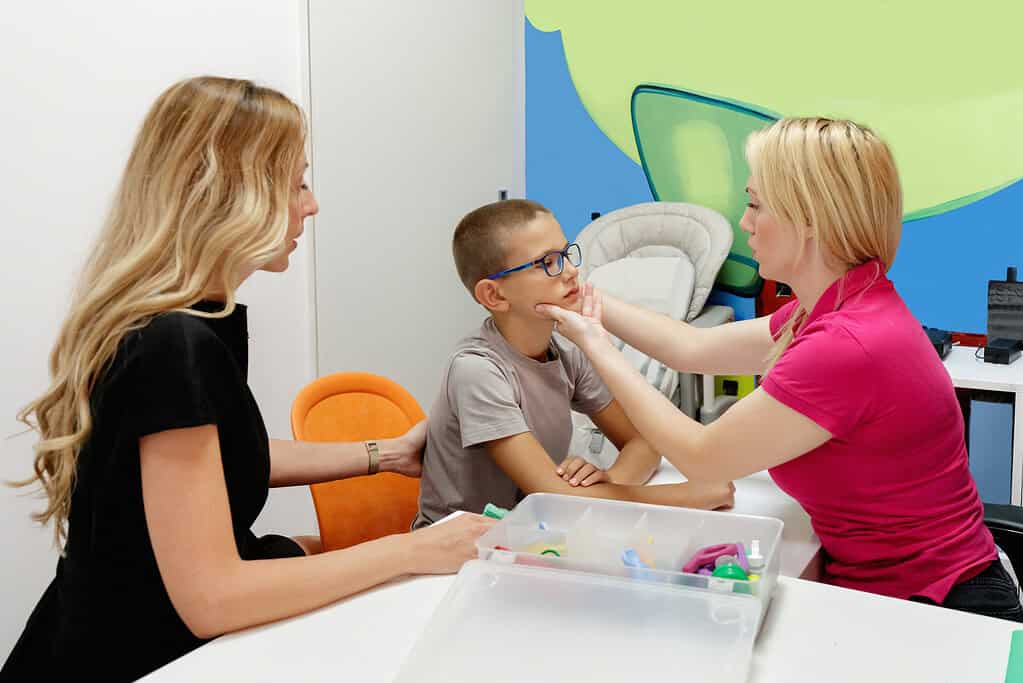
Orofacial myofunctional therapy (OMT) is a bit like physical therapy for the muscles of the mouth and face. Through simple, targeted exercises practiced over time, we help a child develop the muscle strength, coordination, and habits needed for healthy oral function.
The goal is to establish a correct "oral resting posture" — lips gently closed, tongue resting up against the roof of the mouth, teeth slightly apart, and breathing happening through the nose. That resting posture is the foundation for a mature swallow, clear speech, comfortable eating, restful sleep, and balanced growth of the jaw and face.
Myofunctional therapy is a recognized part of speech-language pathology practice, and it works best as part of a team — alongside your child's dentist, orthodontist, ENT, and physician.
Therapy Clubhouse serves families in Westlake Village and nearby Southern California communities through pediatric speech therapy, occupational therapy, Early Intervention support, in-home therapy, telehealth, and clinic-based care.
Help your child produce sounds clearly and confidently through play-based therapy techniques.
Learn MoreBuild vocabulary, sentence structure, and comprehension skills through interactive learning.
Learn MoreSpecialized support for toddlers showing early signs of speech delays or difficulties.
Learn MoreDevelop conversation skills, turn-taking, and social play in a warm environment.
Learn MoreSupport for smoother communication, stuttering, and related confidence skills.
Learn MoreSupport independence with routines, self-care, regulation, and age-appropriate participation goals.
Learn More
Orofacial myofunctional disorders (OMDs) often hide in plain sight. You might notice one or several of these:
A child doesn't need every sign on this list. If a few feel familiar, an evaluation can tell you whether the muscles are part of the picture.

Mouth breathing and nasal breathing. Habitual mouth breathing can affect sleep, attention, dental health, and facial growth. We help children build the lip strength and tongue posture that make comfortable nasal breathing possible, coordinating with an ENT when the airway needs medical evaluation.
Tongue thrust and an immature swallow. When the tongue pushes forward during the swallow, it can affect speech clarity and undo orthodontic work. We retrain the swallow pattern step by step.
Low or forward tongue resting posture. We teach the tongue to find and hold its correct "home" on the roof of the mouth — the single most important habit in myofunctional therapy.
Tongue-tie, before and after a release. A restricted frenum can limit tongue movement for feeding, speech, and posture. We provide therapy before and after a frenectomy so the tongue actually learns to use its new range of motion. We collaborate with the provider who performs the release; we do not perform it ourselves.
Speech sound errors. Many articulation errors — especially a frontal or lateral lisp — are tied to tongue placement and oral posture. Myofunctional therapy pairs naturally with our speech work.
Feeding and chewing challenges. Weak or uncoordinated oral muscles can make chewing, cup drinking, and managing textures harder. We build the oral-motor skills that mealtimes depend on.
Sleep-disordered breathing and snoring. Oral posture and nasal breathing play a role in healthy sleep. As part of a medical team, myofunctional therapy can support better breathing patterns. Sleep concerns are always evaluated with your child's physician or sleep specialist.
Oral habits. We use gentle, child-friendly habit-elimination strategies for thumb, finger, and pacifier habits that may be affecting the bite and oral posture.
Orthodontic support. We work alongside dentists and orthodontists to support airway and facial development, protect orthodontic results, and reduce the chance of relapse.

Every child starts with a comprehensive evaluation. We talk with you in detail about your child's history — feeding, speech, sleep, breathing, habits, and any dental or orthodontic care — because parents often notice the earliest clues. We then look closely at oral resting posture, tongue and lip function, the swallow, breathing patterns, and muscle tone, strength, and coordination.
From there we build an individualized plan of short, doable exercises. A typical course of therapy focuses on:
Because oral function touches so many systems, we collaborate with your child's broader care team — dentist, orthodontist, ENT, pediatrician, pediatric sleep specialist, and the provider performing any tongue-tie release.

A tongue-tie release (frenectomy) opens up the potential for better tongue movement — but it doesn't automatically teach the tongue how to use it. Without follow-up therapy, old patterns and tension often return. We provide therapy before a release, to prepare the muscles and improve outcomes, and after, to build the new movement, posture, and swallow. We coordinate closely with the dentist, ENT, or surgeon performing the procedure, as well as lactation and feeding providers when relevant.

The evaluation. Your first visit is a relaxed, thorough look at how your child's oral muscles are working. For younger children, much of this happens through play; older children may do more structured tasks. You'll leave understanding what we found and what we'd recommend.
Sessions. Therapy is active, playful, and built around your child. Sessions are scheduled regularly, with the real progress coming from brief daily practice between visits.
Home practice and parent coaching. Myofunctional therapy works through repetition, so we keep home exercises short and clear, and we coach you to support them with confidence.
Timeline. Every child is different. Because the exercises require following directions and practicing consistently, formal myofunctional programs are often most effective around ages 5 to 7 and up — but oral-motor and feeding foundations can begin earlier, and we tailor the approach to your child's age and readiness.
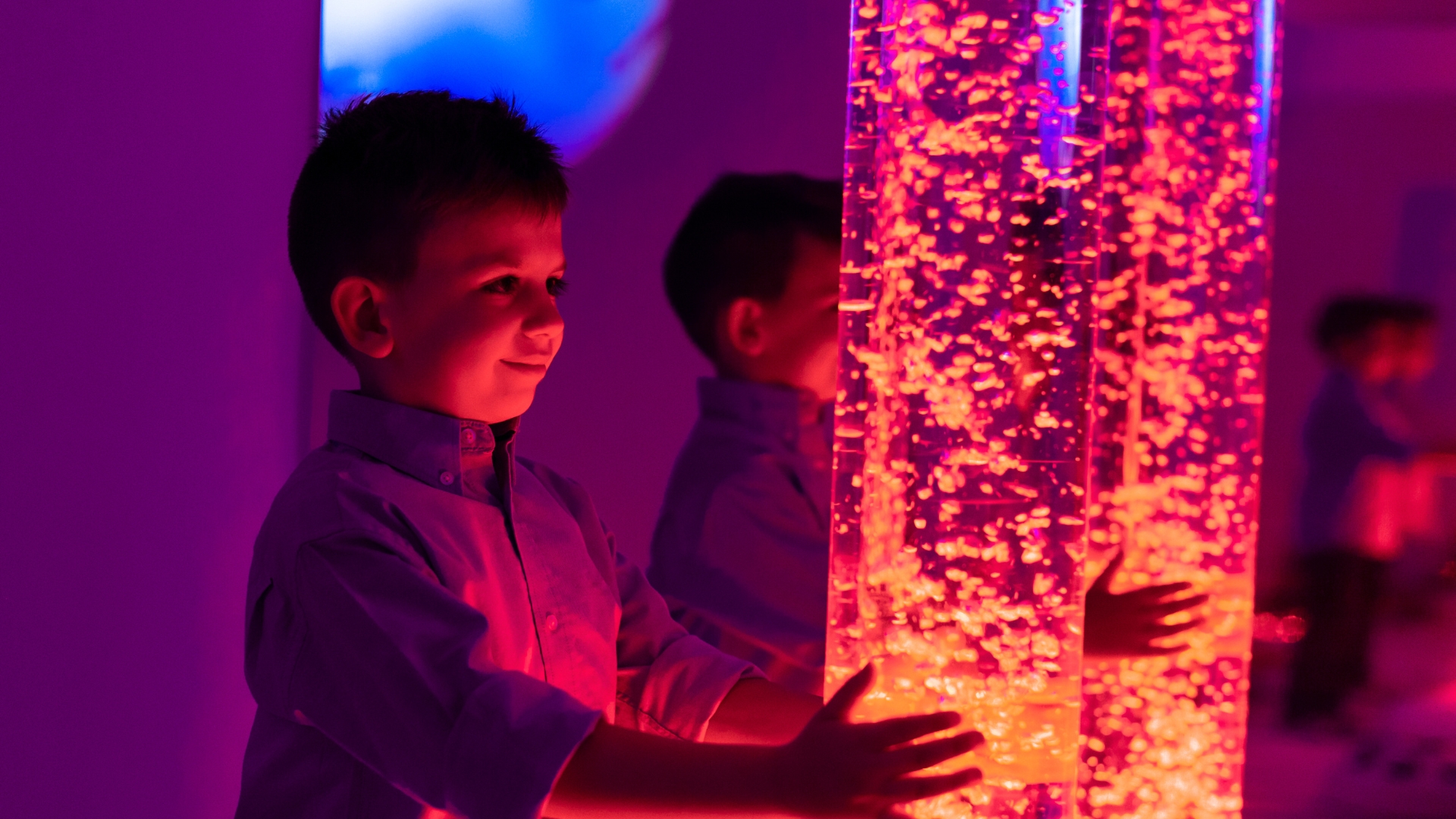
Myofunctional therapy isn't a stand-alone silo at Therapy Clubhouse — it's part of the same integrated, pediatric-only care our families already know. Because our speech-language pathologists and occupational therapists work side by side, a child can address tongue posture, articulation, feeding, and sensory needs with one coordinated team instead of starting over in separate places.

We meet families where they are — literally. Myofunctional therapy is available in our Westlake Village clinic, in your home, and through telehealth across the Conejo Valley and Ventura County. Because so much of this work is daily practice, in-home and virtual sessions can be especially effective for carryover.

Wondering whether your child's mouth breathing, speech sounds, tongue posture, or eating could benefit from myofunctional therapy? The best first step is a conversation. We offer a free consultation, and we'll help you understand your options — including insurance and Tri-Counties Regional Center — before you commit to anything. You can also read how to access services or start with a pediatric speech and language evaluation.

Is my child too young for myofunctional therapy?
Possibly not — it depends on what's going on. Formal exercise-based programs usually work best once a child can follow directions and practice (often around age 5 and up), but feeding and oral-motor support can start much earlier. An evaluation is the best way to know.
Is this the same as speech therapy?
They overlap and work beautifully together, but they're not identical. Speech therapy targets sounds and language; myofunctional therapy targets the muscles and resting posture that support speech, feeding, breathing, and sleep. Many children benefit from both.
Do you perform tongue-tie releases?
No. We provide the therapy that prepares for and follows a release, and we coordinate with the dentist, ENT, or surgeon who performs the procedure.
Will myofunctional therapy fix my child's snoring or sleep apnea?
Sleep-disordered breathing always needs medical evaluation. As part of a team, myofunctional therapy can support healthier breathing and oral posture — but it isn't a stand-alone treatment for sleep apnea.
Does insurance cover it?
It can vary. We'll walk you through your insurance and Regional Center options during your consultation.
Related reading: Pediatric Speech & Language Evaluation, Pediatric Speech Therapy in Westlake Village, and In-Home & Telehealth Pediatric Therapy.


